



Tag Archives: for christians
Exodus 23
Exodus 23
A Call for Justice
1 “You must not pass along false rumors. You must not cooperate with evil people by lying on the witness stand.
2 “You must not follow the crowd in doing wrong. When you are called to testify in a dispute, do not be swayed by the crowd to twist justice. 3 And do not slant your testimony in favor of a person just because that person is poor.
4 “If you come upon your enemy’s ox or donkey that has strayed away, take it back to its owner. 5 If you see that the donkey of someone who hates you has collapsed under its load, do not walk by. Instead, stop and help.
6 “In a lawsuit, you must not deny justice to the poor.
7 “Be sure never to charge anyone falsely with evil. Never sentence an innocent or blameless person to death, for I never declare a guilty person to be innocent.
8 “Take no bribes, for a bribe makes you ignore something that you clearly see. A bribe makes even a righteous person twist the truth.
9 “You must not oppress foreigners. You know what it’s like to be a foreigner, for you yourselves were once foreigners in the land of Egypt.
10 “Plant and harvest your crops for six years, 11 but let the land be renewed and lie uncultivated during the seventh year. Then let the poor among you harvest whatever grows on its own. Leave the rest for wild animals to eat. The same applies to your vineyards and olive groves.
12 “You have six days each week for your ordinary work, but on the seventh day you must stop working. This gives your ox and your donkey a chance to rest. It also allows your slaves and the foreigners living among you to be refreshed.
13 “Pay close attention to all my instructions. You must not call on the name of any other gods. Do not even speak their names.
Three Annual Festivals
14 “Each year you must celebrate three festivals in my honor. 15 First, celebrate the Festival of Unleavened Bread. For seven days the bread you eat must be made without yeast, just as I commanded you. Celebrate this festival annually at the appointed time in early spring, in the month of Abib,[a] for that is the anniversary of your departure from Egypt. No one may appear before me without an offering.
16 “Second, celebrate the Festival of Harvest,[b] when you bring me the first crops of your harvest.
“Finally, celebrate the Festival of the Final Harvest[c] at the end of the harvest season, when you have harvested all the crops from your fields. 17 At these three times each year, every man in Israel must appear before the Sovereign, the Lord.
18 “You must not offer the blood of my sacrificial offerings together with any baked goods containing yeast. And do not leave the fat from the festival offerings until the next morning.
19 “As you harvest your crops, bring the very best of the first harvest to the house of the Lordyour God.
“You must not cook a young goat in its mother’s milk.
A Promise of the Lord’s Presence
20 “See, I am sending an angel before you to protect you on your journey and lead you safely to the place I have prepared for you. 21 Pay close attention to him, and obey his instructions. Do not rebel against him, for he is my representative, and he will not forgive your rebellion.22 But if you are careful to obey him, following all my instructions, then I will be an enemy to your enemies, and I will oppose those who oppose you. 23 For my angel will go before you and bring you into the land of the Amorites, Hittites, Perizzites, Canaanites, Hivites, and Jebusites, so you may live there. And I will destroy them completely. 24 You must not worship the gods of these nations or serve them in any way or imitate their evil practices. Instead, you must utterly destroy them and smash their sacred pillars.
25 “You must serve only the Lord your God. If you do, I[d] will bless you with food and water, and I will protect you from illness. 26 There will be no miscarriages or infertility in your land, and I will give you long, full lives.
27 “I will send my terror ahead of you and create panic among all the people whose lands you invade. I will make all your enemies turn and run. 28 I will send terror[e] ahead of you to drive out the Hivites, Canaanites, and Hittites. 29 But I will not drive them out in a single year, because the land would become desolate and the wild animals would multiply and threaten you. 30 I will drive them out a little at a time until your population has increased enough to take possession of the land. 31 And I will fix your boundaries from the Red Sea to the Mediterranean Sea,[f] and from the eastern wilderness to the Euphrates River.[g] I will hand over to you the people now living in the land, and you will drive them out ahead of you.
32 “Make no treaties with them or their gods. 33 They must not live in your land, or they will cause you to sin against me. If you serve their gods, you will be caught in the trap of idolatry.”
Footnotes:
- 23:15 Hebrew appointed time in the month of Abib. This first month of the ancient Hebrew lunar calendar usually occurs within the months of March and April.
- 23:16a Or Festival of Weeks. This was later called the Festival of Pentecost (see Acts 2:1). It is celebrated today as Shavuot (or Shabuoth).
- 23:16b Or Festival of Ingathering. This was later called the Festival of Shelters or Festival of Tabernacles (see Lev 23:33-36). It is celebrated today as Sukkot (or Succoth).
- 23:25 As in Greek and Latin versions; Hebrew reads he.
- 23:28 Often rendered the hornet. The meaning of the Hebrew is uncertain.
- 23:31a Hebrew from the sea of reeds to the sea of the Philistines.
- 23:31b Hebrew from the wilderness to the river.
Christians Do Keep The Torah!
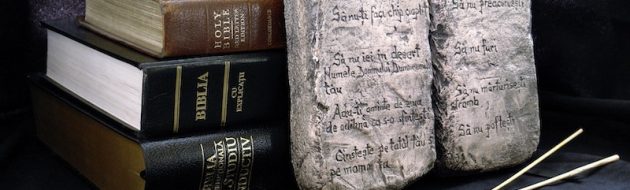
There is an excellent article in the back of the Aramaic English New Testament by Andrew Gabriel Roth called “How much Torah do Christians already keep?”
Up to 87% of the Torah is kept by some of the Christian community. In this video I discuss this topic.
If the law is done away with, why are Christians keeping so many of them?

Exodus 17
Exodus 17
Water from the Rock
1 At the Lord’s command, the whole community of Israel left the wilderness of Sin[a] and moved from place to place. Eventually they camped at Rephidim, but there was no water there for the people to drink. 2 So once more the people complained against Moses. “Give us water to drink!” they demanded.
“Quiet!” Moses replied. “Why are you complaining against me? And why are you testing the Lord?”
3 But tormented by thirst, they continued to argue with Moses. “Why did you bring us out of Egypt? Are you trying to kill us, our children, and our livestock with thirst?”
4 Then Moses cried out to the Lord, “What should I do with these people? They are ready to stone me!”
5 The Lord said to Moses, “Walk out in front of the people. Take your staff, the one you used when you struck the water of the Nile, and call some of the elders of Israel to join you. 6 I will stand before you on the rock at Mount Sinai.[b] Strike the rock, and water will come gushing out. Then the people will be able to drink.” So Moses struck the rock as he was told, and water gushed out as the elders looked on.
7 Moses named the place Massah (which means “test”) and Meribah (which means “arguing”) because the people of Israel argued with Moses and tested the Lord by saying, “Is the Lordhere with us or not?”
Israel Defeats the Amalekites
8 While the people of Israel were still at Rephidim, the warriors of Amalek attacked them.9 Moses commanded Joshua, “Choose some men to go out and fight the army of Amalek for us. Tomorrow, I will stand at the top of the hill, holding the staff of God in my hand.”
10 So Joshua did what Moses had commanded and fought the army of Amalek. Meanwhile, Moses, Aaron, and Hur climbed to the top of a nearby hill. 11 As long as Moses held up the staff in his hand, the Israelites had the advantage. But whenever he dropped his hand, the Amalekites gained the advantage. 12 Moses’ arms soon became so tired he could no longer hold them up. So Aaron and Hur found a stone for him to sit on. Then they stood on each side of Moses, holding up his hands. So his hands held steady until sunset. 13 As a result, Joshua overwhelmed the army of Amalek in battle.
14 After the victory, the Lord instructed Moses, “Write this down on a scroll as a permanent reminder, and read it aloud to Joshua: I will erase the memory of Amalek from under heaven.”15 Moses built an altar there and named it Yahweh-Nissi (which means “the Lord is my banner”). 16 He said, “They have raised their fist against the Lord’s throne, so now[c] the Lordwill be at war with Amalek generation after generation.”
Exodus 15
Exodus 15
A Song of Deliverance
1 Then Moses and the people of Israel sang this song to the Lord:
“I will sing to the Lord,
for he has triumphed gloriously;
he has hurled both horse and rider
into the sea.
2 The Lord is my strength and my song;
he has given me victory.
This is my God, and I will praise him—
my father’s God, and I will exalt him!
3 The Lord is a warrior;
Yahweh[a] is his name!
4 Pharaoh’s chariots and army
he has hurled into the sea.
The finest of Pharaoh’s officers
are drowned in the Red Sea.[b]
5 The deep waters gushed over them;
they sank to the bottom like a stone.
6 “Your right hand, O Lord,
is glorious in power.
Your right hand, O Lord,
smashes the enemy.
7 In the greatness of your majesty,
you overthrow those who rise against you.
You unleash your blazing fury;
it consumes them like straw.
8 At the blast of your breath,
the waters piled up!
The surging waters stood straight like a wall;
in the heart of the sea the deep waters became hard.
9 “The enemy boasted, ‘I will chase them
and catch up with them.
I will plunder them
and consume them.
I will flash my sword;
my powerful hand will destroy them.’
10 But you blew with your breath,
and the sea covered them.
They sank like lead
in the mighty waters.
11 “Who is like you among the gods, O Lord—
glorious in holiness,
awesome in splendor,
performing great wonders?
12 You raised your right hand,
and the earth swallowed our enemies.
13 “With your unfailing love you lead
the people you have redeemed.
In your might, you guide them
to your sacred home.
14 The peoples hear and tremble;
anguish grips those who live in Philistia.
15 The leaders of Edom are terrified;
the nobles of Moab tremble.
All who live in Canaan melt away;
16 terror and dread fall upon them.
The power of your arm
makes them lifeless as stone
until your people pass by, O Lord,
until the people you purchased pass by.
17 You will bring them in and plant them on your own mountain—
the place, O Lord, reserved for your own dwelling,
the sanctuary, O Lord, that your hands have established.
18 The Lord will reign forever and ever!”
19 When Pharaoh’s horses, chariots, and charioteers rushed into the sea, the Lord brought the water crashing down on them. But the people of Israel had walked through the middle of the sea on dry ground!
20 Then Miriam the prophet, Aaron’s sister, took a tambourine and led all the women as they played their tambourines and danced. 21 And Miriam sang this song:
“Sing to the Lord,
for he has triumphed gloriously;
he has hurled both horse and rider
into the sea.”
Bitter Water at Marah
22 Then Moses led the people of Israel away from the Red Sea, and they moved out into the desert of Shur. They traveled in this desert for three days without finding any water. 23 When they came to the oasis of Marah, the water was too bitter to drink. So they called the place Marah (which means “bitter”).
24 Then the people complained and turned against Moses. “What are we going to drink?” they demanded. 25 So Moses cried out to the Lord for help, and the Lord showed him a piece of wood. Moses threw it into the water, and this made the water good to drink.
It was there at Marah that the Lord set before them the following decree as a standard to test their faithfulness to him. 26 He said, “If you will listen carefully to the voice of the Lord your God and do what is right in his sight, obeying his commands and keeping all his decrees, then I will not make you suffer any of the diseases I sent on the Egyptians; for I am the Lordwho heals you.”
27 After leaving Marah, the Israelites traveled on to the oasis of Elim, where they found twelve springs and seventy palm trees. They camped there beside the water.
Take Care of Your Temple

The link to learn more about the health retreat is
http://healthwatchman.com/florida-raw-retreat/
Exodus 9
Exodus 9
A Plague against Livestock
1 “Go back to Pharaoh,” the Lord commanded Moses. “Tell him, ‘This is what the Lord, the God of the Hebrews, says: Let my people go, so they can worship me. 2 If you continue to hold them and refuse to let them go, 3 the hand of the Lord will strike all your livestock—your horses, donkeys, camels, cattle, sheep, and goats—with a deadly plague. 4 But the Lord will again make a distinction between the livestock of the Israelites and that of the Egyptians. Not a single one of Israel’s animals will die! 5 The Lord has already set the time for the plague to begin. He has declared that he will strike the land tomorrow.’”
6 And the Lord did just as he had said. The next morning all the livestock of the Egyptians died, but the Israelites didn’t lose a single animal. 7 Pharaoh sent his officials to investigate, and they discovered that the Israelites had not lost a single animal! But even so, Pharaoh’s heart remained stubborn,[a] and he still refused to let the people go.
A Plague of Festering Boils
8 Then the Lord said to Moses and Aaron, “Take handfuls of soot from a brick kiln, and have Moses toss it into the air while Pharaoh watches. 9 The ashes will spread like fine dust over the whole land of Egypt, causing festering boils to break out on people and animals throughout the land.”
10 So they took soot from a brick kiln and went and stood before Pharaoh. As Pharaoh watched, Moses threw the soot into the air, and boils broke out on people and animals alike.11 Even the magicians were unable to stand before Moses, because the boils had broken out on them and all the Egyptians. 12 But the Lord hardened Pharaoh’s heart, and just as the Lord had predicted to Moses, Pharaoh refused to listen.
A Plague of Hail
13 Then the Lord said to Moses, “Get up early in the morning and stand before Pharaoh. Tell him, ‘This is what the Lord, the God of the Hebrews, says: Let my people go, so they can worship me. 14 If you don’t, I will send more plagues on you[b] and your officials and your people. Then you will know that there is no one like me in all the earth. 15 By now I could have lifted my hand and struck you and your people with a plague to wipe you off the face of the earth. 16 But I have spared you for a purpose—to show you my power[c] and to spread my fame throughout the earth. 17 But you still lord it over my people and refuse to let them go.18 So tomorrow at this time I will send a hailstorm more devastating than any in all the history of Egypt. 19 Quick! Order your livestock and servants to come in from the fields to find shelter. Any person or animal left outside will die when the hail falls.’”
20 Some of Pharaoh’s officials were afraid because of what the Lord had said. They quickly brought their servants and livestock in from the fields. 21 But those who paid no attention to the word of the Lord left theirs out in the open.
22 Then the Lord said to Moses, “Lift your hand toward the sky so hail may fall on the people, the livestock, and all the plants throughout the land of Egypt.”
23 So Moses lifted his staff toward the sky, and the Lord sent thunder and hail, and lightning flashed toward the earth. The Lord sent a tremendous hailstorm against all the land of Egypt.24 Never in all the history of Egypt had there been a storm like that, with such devastating hail and continuous lightning. 25 It left all of Egypt in ruins. The hail struck down everything in the open field—people, animals, and plants alike. Even the trees were destroyed. 26 The only place without hail was the region of Goshen, where the people of Israel lived.
27 Then Pharaoh quickly summoned Moses and Aaron. “This time I have sinned,” he confessed. “The Lord is the righteous one, and my people and I are wrong. 28 Please beg the Lord to end this terrifying thunder and hail. We’ve had enough. I will let you go; you don’t need to stay any longer.”
29 “All right,” Moses replied. “As soon as I leave the city, I will lift my hands and pray to the Lord. Then the thunder and hail will stop, and you will know that the earth belongs to the Lord. 30 But I know that you and your officials still do not fear the Lord God.”
31 (All the flax and barley were ruined by the hail, because the barley had formed heads and the flax was budding. 32 But the wheat and the emmer wheat were spared, because they had not yet sprouted from the ground.)
33 So Moses left Pharaoh’s court and went out of the city. When he lifted his hands to the Lord, the thunder and hail stopped, and the downpour ceased. 34 But when Pharaoh saw that the rain, hail, and thunder had stopped, he and his officials sinned again, and Pharaoh again became stubborn.[d] 35 Because his heart was hard, Pharaoh refused to let the people leave, just as the Lord had predicted through Moses.
Footnotes:
Exodus 7
Exodus 7
Aaron’s Staff Becomes a Serpent
1 Then the Lord said to Moses, “Pay close attention to this. I will make you seem like God to Pharaoh, and your brother, Aaron, will be your prophet. 2 Tell Aaron everything I command you, and Aaron must command Pharaoh to let the people of Israel leave his country. 3 But I will make Pharaoh’s heart stubborn so I can multiply my miraculous signs and wonders in the land of Egypt. 4 Even then Pharaoh will refuse to listen to you. So I will bring down my fist on Egypt. Then I will rescue my forces—my people, the Israelites—from the land of Egypt with great acts of judgment. 5 When I raise my powerful hand and bring out the Israelites, the Egyptians will know that I am the Lord.”
6 So Moses and Aaron did just as the Lord had commanded them. 7 Moses was eighty years old, and Aaron was eighty-three when they made their demands to Pharaoh.
8 Then the Lord said to Moses and Aaron, 9 “Pharaoh will demand, ‘Show me a miracle.’ When he does this, say to Aaron, ‘Take your staff and throw it down in front of Pharaoh, and it will become a serpent.[a]’”
10 So Moses and Aaron went to Pharaoh and did what the Lord had commanded them. Aaron threw down his staff before Pharaoh and his officials, and it became a serpent! 11 Then Pharaoh called in his own wise men and sorcerers, and these Egyptian magicians did the same thing with their magic. 12 They threw down their staffs, which also became serpents! But then Aaron’s staff swallowed up their staffs. 13 Pharaoh’s heart, however, remained hard. He still refused to listen, just as the Lord had predicted.
A Plague of Blood
14 Then the Lord said to Moses, “Pharaoh’s heart is stubborn,[b] and he still refuses to let the people go. 15 So go to Pharaoh in the morning as he goes down to the river. Stand on the bank of the Nile and meet him there. Be sure to take along the staff that turned into a snake.16 Then announce to him, ‘The Lord, the God of the Hebrews, has sent me to tell you, “Let my people go, so they can worship me in the wilderness.” Until now, you have refused to listen to him. 17 So this is what the Lord says: “I will show you that I am the Lord.” Look! I will strike the water of the Nile with this staff in my hand, and the river will turn to blood. 18 The fish in it will die, and the river will stink. The Egyptians will not be able to drink any water from the Nile.’”
19 Then the Lord said to Moses: “Tell Aaron, ‘Take your staff and raise your hand over the waters of Egypt—all its rivers, canals, ponds, and all the reservoirs. Turn all the water to blood. Everywhere in Egypt the water will turn to blood, even the water stored in wooden bowls and stone pots.’”
20 So Moses and Aaron did just as the Lord commanded them. As Pharaoh and all of his officials watched, Aaron raised his staff and struck the water of the Nile. Suddenly, the whole river turned to blood! 21 The fish in the river died, and the water became so foul that the Egyptians couldn’t drink it. There was blood everywhere throughout the land of Egypt. 22 But again the magicians of Egypt used their magic, and they, too, turned water into blood. So Pharaoh’s heart remained hard. He refused to listen to Moses and Aaron, just as the Lord had predicted. 23 Pharaoh returned to his palace and put the whole thing out of his mind. 24 Then all the Egyptians dug along the riverbank to find drinking water, for they couldn’t drink the water from the Nile.
25 Seven days passed from the time the Lord struck the Nile.
Footnotes:
Exodus 6
Exodus 6
Promises of Deliverance
1 Then the Lord told Moses, “Now you will see what I will do to Pharaoh. When he feels the force of my strong hand, he will let the people go. In fact, he will force them to leave his land!”
2 And God said to Moses, “I am Yahweh—‘the Lord.’[a] 3 I appeared to Abraham, to Isaac, and to Jacob as El-Shaddai—‘God Almighty’[b]—but I did not reveal my name, Yahweh, to them.4 And I reaffirmed my covenant with them. Under its terms, I promised to give them the land of Canaan, where they were living as foreigners. 5 You can be sure that I have heard the groans of the people of Israel, who are now slaves to the Egyptians. And I am well aware of my covenant with them.
6 “Therefore, say to the people of Israel: ‘I am the Lord. I will free you from your oppression and will rescue you from your slavery in Egypt. I will redeem you with a powerful arm and great acts of judgment. 7 I will claim you as my own people, and I will be your God. Then you will know that I am the Lord your God who has freed you from your oppression in Egypt. 8 I will bring you into the land I swore to give to Abraham, Isaac, and Jacob. I will give it to you as your very own possession. I am the Lord!’”
9 So Moses told the people of Israel what the Lord had said, but they refused to listen anymore. They had become too discouraged by the brutality of their slavery.
10 Then the Lord said to Moses, 11 “Go back to Pharaoh, the king of Egypt, and tell him to let the people of Israel leave his country.”
12 “But Lord!” Moses objected. “My own people won’t listen to me anymore. How can I expect Pharaoh to listen? I’m such a clumsy speaker![c]”
13 But the Lord spoke to Moses and Aaron and gave them orders for the Israelites and for Pharaoh, the king of Egypt. The Lord commanded Moses and Aaron to lead the people of Israel out of Egypt.
The Ancestors of Moses and Aaron
14 These are the ancestors of some of the clans of Israel:
The sons of Reuben, Israel’s oldest son, were Hanoch, Pallu, Hezron, and Carmi. Their descendants became the clans of Reuben.
15 The sons of Simeon were Jemuel, Jamin, Ohad, Jakin, Zohar, and Shaul. (Shaul’s mother was a Canaanite woman.) Their descendants became the clans of Simeon.
16 These are the descendants of Levi, as listed in their family records: The sons of Levi were Gershon, Kohath, and Merari. (Levi lived to be 137 years old.)
17 The descendants of Gershon included Libni and Shimei, each of whom became the ancestor of a clan.
18 The descendants of Kohath included Amram, Izhar, Hebron, and Uzziel. (Kohath lived to be 133 years old.)
19 The descendants of Merari included Mahli and Mushi.
These are the clans of the Levites, as listed in their family records.
20 Amram married his father’s sister Jochebed, and she gave birth to his sons, Aaron and Moses. (Amram lived to be 137 years old.)
21 The sons of Izhar were Korah, Nepheg, and Zicri.
22 The sons of Uzziel were Mishael, Elzaphan, and Sithri.
23 Aaron married Elisheba, the daughter of Amminadab and sister of Nahshon, and she gave birth to his sons, Nadab, Abihu, Eleazar, and Ithamar.
24 The sons of Korah were Assir, Elkanah, and Abiasaph. Their descendants became the clans of Korah.
25 Eleazar son of Aaron married one of the daughters of Putiel, and she gave birth to his son, Phinehas.
These are the ancestors of the Levite families, listed according to their clans.
26 The Aaron and Moses named in this list are the same ones to whom the Lord said, “Lead the people of Israel out of the land of Egypt like an army.” 27 It was Moses and Aaron who spoke to Pharaoh, the king of Egypt, about leading the people of Israel out of Egypt.
28 When the Lord spoke to Moses in the land of Egypt, 29 he said to him, “I am the Lord! Tell Pharaoh, the king of Egypt, everything I am telling you.” 30 But Moses argued with the Lord, saying, “I can’t do it! I’m such a clumsy speaker! Why should Pharaoh listen to me?”
Footnotes:
- 6:2 Yahweh is a transliteration of the proper name YHWH that is sometimes rendered “Jehovah”; in this translation it is usually rendered “the Lord” (note the use of small capitals).
- 6:3 El-Shaddai, which means “God Almighty,” is the name for God used in Gen 17:1; 28:3; 35:11; 43:14; 48:3.
- 6:12 Hebrew I have uncircumcised lips; also in 6:30.
Sister, Why Do You Dress That Way?
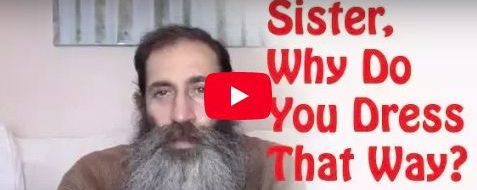
I read a booklet about modesty called Sister why do you dress that way.
This one scripture sums up this booklet…
“The aged women…that they may teach the young women to be sober, to love their husbands, to love their children, to be discreet, chaste, keepers at home, good, obedient to their own husbands, that the word of God be not blasphemed.” -Titus 2:3-5
3 questions are asked by the author to women that I discuss in this video about who sets the standard of how a women should dress
1-Who should we look to, as saints, to set the standard for what we wear?
A. The world
B. Ourselves
C. Yahweh
2-Who is supposed to set the standards in all things concerning life on Earth?
A. French clothing designers
B. Each individual
C. Yahweh
3-How many verses are there in the scriptures which pertain to clothing and what saints have worn and should wear?
A. None
B. Between 1 and 10
C. More than 10
The answer to each question is C Yahweh is our compass and guide in all things and He has much, to say to us in His revealed words concerning our standards of dress.