


Tag Archives: Arthur Bailey
Exodus 33
Exodus 33
1The Lord said to Moses, “Get going, you and the people you brought up from the land of Egypt. Go up to the land I swore to give to Abraham, Isaac, and Jacob. I told them, ‘I will give this land to your descendants.’ 2 And I will send an angel before you to drive out the Canaanites, Amorites, Hittites, Perizzites, Hivites, and Jebusites. 3 Go up to this land that flows with milk and honey. But I will not travel among you, for you are a stubborn and rebellious people. If I did, I would surely destroy you along the way.”
4 When the people heard these stern words, they went into mourning and stopped wearing their jewelry and fine clothes. 5 For the Lord had told Moses to tell them, “You are a stubborn and rebellious people. If I were to travel with you for even a moment, I would destroy you. Remove your jewelry and fine clothes while I decide what to do with you.” 6 So from the time they left Mount Sinai,[a] the Israelites wore no more jewelry or fine clothes.
7 It was Moses’ practice to take the Tent of Meeting[b] and set it up some distance from the camp. Everyone who wanted to make a request of the Lord would go to the Tent of Meeting outside the camp.
8 Whenever Moses went out to the Tent of Meeting, all the people would get up and stand in the entrances of their own tents. They would all watch Moses until he disappeared inside.9 As he went into the tent, the pillar of cloud would come down and hover at its entrance while the Lord spoke with Moses. 10 When the people saw the cloud standing at the entrance of the tent, they would stand and bow down in front of their own tents. 11 Inside the Tent of Meeting, the Lord would speak to Moses face to face, as one speaks to a friend. Afterward Moses would return to the camp, but the young man who assisted him, Joshua son of Nun, would remain behind in the Tent of Meeting.
Moses Sees the Lord’s Glory
12 One day Moses said to the Lord, “You have been telling me, ‘Take these people up to the Promised Land.’ But you haven’t told me whom you will send with me. You have told me, ‘I know you by name, and I look favorably on you.’ 13 If it is true that you look favorably on me, let me know your ways so I may understand you more fully and continue to enjoy your favor. And remember that this nation is your very own people.”
14 The Lord replied, “I will personally go with you, Moses, and I will give you rest—everything will be fine for you.”
15 Then Moses said, “If you don’t personally go with us, don’t make us leave this place.16 How will anyone know that you look favorably on me—on me and on your people—if you don’t go with us? For your presence among us sets your people and me apart from all other people on the earth.”
17 The Lord replied to Moses, “I will indeed do what you have asked, for I look favorably on you, and I know you by name.”
18 Moses responded, “Then show me your glorious presence.”
19 The Lord replied, “I will make all my goodness pass before you, and I will call out my name, Yahweh,[c] before you. For I will show mercy to anyone I choose, and I will show compassion to anyone I choose. 20 But you may not look directly at my face, for no one may see me and live.” 21 The Lord continued, “Look, stand near me on this rock. 22 As my glorious presence passes by, I will hide you in the crevice of the rock and cover you with my hand until I have passed by. 23 Then I will remove my hand and let you see me from behind. But my face will not be seen.”
Footnotes:
- 33:6 Hebrew Horeb, another name for Sinai.
- 33:7 This “Tent of Meeting” is different from the Tabernacle described in chapters 26 and 36.
- 33:19 Yahweh is a transliteration of the proper name YHWH that is sometimes rendered “Jehovah”; in this translation it is usually rendered “the Lord” (note the use of small capitals).
What is slavery in the bible?
What is slavery in the bible?
Bible Sabbath Fellowship Friday January 12th, 2018 @ 10pm est
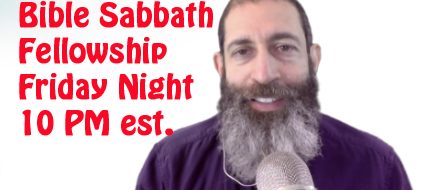
Host Paul Nison and 9 other guest fellowship and discuss Torah related topics.
If you would like to be on the panel email me at the website http://www.TorahLifeMinistries.org contact tab.
The Torah Portion for this week
Torah Portion #14 Va’era (Exodus 6:2-9:35)
If you would like to join my raw food health retreat
visit this link
http://healthwatchman.com/florida-raw-retreat/
If you would like to join my raw food health retreat
visit this link
http://healthwatchman.com/florida-raw-retreat/
Exodus 27
Exodus 27
Plans for the Altar of Burnt Offering
1 “Using acacia wood, construct a square altar 7 1⁄2 feet wide, 7 1⁄2 feet long, and 4 1⁄2 feet high.[a] 2 Make horns for each of its four corners so that the horns and altar are all one piece. Overlay the altar with bronze. 3 Make ash buckets, shovels, basins, meat forks, and firepans, all of bronze. 4 Make a bronze grating for it, and attach four bronze rings at its four corners. 5 Install the grating halfway down the side of the altar, under the ledge. 6 For carrying the altar, make poles from acacia wood, and overlay them with bronze. 7 Insert the poles through the rings on the two sides of the altar. 8 The altar must be hollow, made from planks. Build it just as you were shown on the mountain.
Plans for the Courtyard
9 “Then make the courtyard for the Tabernacle, enclosed with curtains made of finely woven linen. On the south side, make the curtains 150 feet long.[b] 10 They will be held up by twenty posts set securely in twenty bronze bases. Hang the curtains with silver hooks and rings.11 Make the curtains the same on the north side—150 feet of curtains held up by twenty posts set securely in bronze bases. Hang the curtains with silver hooks and rings. 12 The curtains on the west end of the courtyard will be 75 feet long,[c] supported by ten posts set into ten bases. 13 The east end of the courtyard, the front, will also be 75 feet long. 14 The courtyard entrance will be on the east end, flanked by two curtains. The curtain on the right side will be 22 1⁄2 feet long,[d] supported by three posts set into three bases. 15 The curtain on the left side will also be 22 1⁄2 feet long, supported by three posts set into three bases.
16 “For the entrance to the courtyard, make a curtain that is 30 feet long.[e] Make it from finely woven linen, and decorate it with beautiful embroidery in blue, purple, and scarlet thread. Support it with four posts, each securely set in its own base. 17 All the posts around the courtyard must have silver rings and hooks and bronze bases. 18 So the entire courtyard will be 150 feet long and 75 feet wide, with curtain walls 7 1⁄2 feet high,[f] made from finely woven linen. The bases for the posts will be made of bronze.
19 “All the articles used in the rituals of the Tabernacle, including all the tent pegs used to support the Tabernacle and the courtyard curtains, must be made of bronze.
Light for the Tabernacle
20 “Command the people of Israel to bring you pure oil of pressed olives for the light, to keep the lamps burning continually. 21 The lampstand will stand in the Tabernacle, in front of the inner curtain that shields the Ark of the Covenant.[g] Aaron and his sons must keep the lamps burning in the Lord’s presence all night. This is a permanent law for the people of Israel, and it must be observed from generation to generation.
Footnotes:
- 27:1 Hebrew 5 cubits [2.3 meters] wide, 5 cubits long, a square, and 3 cubits [1.4 meters] high.
- 27:9 Hebrew 100 cubits [46 meters]; also in 27:11.
- 27:12 Hebrew 50 cubits [23 meters]; also in 27:13.
- 27:14 Hebrew 15 cubits [6.9 meters]; also in 27:15.
- 27:16 Hebrew 20 cubits [9.2 meters].
- 27:18 Hebrew 100 cubits [46 meters] long and 50 by 50 [23 meters] wide and 5 cubits [2.3 meters] high.
- 27:21 Hebrew in the Tent of Meeting, outside the inner curtain that is in front of the Testimony. See note on 25:16.
Exodus 26
Exodus 26
Plans for the Tabernacle
Here is the video to see tabernacle
https://youtu.be/a5jnu61UYaQ
1 “Make the Tabernacle from ten curtains of finely woven linen. Decorate the curtains with blue, purple, and scarlet thread and with skillfully embroidered cherubim. 2 These ten curtains must all be exactly the same size—42 feet long and 6 feet wide.[a] 3 Join five of these curtains together to make one long curtain, then join the other five into a second long curtain. 4 Put loops of blue yarn along the edge of the last curtain in each set. 5 The fifty loops along the edge of one curtain are to match the fifty loops along the edge of the other curtain. 6 Then make fifty gold clasps and fasten the long curtains together with the clasps. In this way, the Tabernacle will be made of one continuous piece.
7 “Make eleven curtains of goat-hair cloth to serve as a tent covering for the Tabernacle.8 These eleven curtains must all be exactly the same size—45 feet long and 6 feet wide.[b]9 Join five of these curtains together to make one long curtain, and join the other six into a second long curtain. Allow 3 feet of material from the second set of curtains to hang over the front[c] of the sacred tent. 10 Make fifty loops for one edge of each large curtain. 11 Then make fifty bronze clasps, and fasten the loops of the long curtains with the clasps. In this way, the tent covering will be made of one continuous piece. 12 The remaining 3 feet[d] of this tent covering will be left to hang over the back of the Tabernacle. 13 Allow 18 inches[e] of remaining material to hang down over each side, so the Tabernacle is completely covered. 14 Complete the tent covering with a protective layer of tanned ram skins and a layer of fine goatskin leather.
15 “For the framework of the Tabernacle, construct frames of acacia wood. 16 Each frame must be 15 feet high and 27 inches wide,[f] 17 with two pegs under each frame. Make all the frames identical. 18 Make twenty of these frames to support the curtains on the south side of the Tabernacle. 19 Also make forty silver bases—two bases under each frame, with the pegs fitting securely into the bases. 20 For the north side of the Tabernacle, make another twenty frames, 21 with their forty silver bases, two bases under each frame. 22 Make six frames for the rear—the west side of the Tabernacle— 23 along with two additional frames to reinforce the rear corners of the Tabernacle. 24 These corner frames will be matched at the bottom and firmly attached at the top with a single ring, forming a single corner unit. Make both of these corner units the same way. 25 So there will be eight frames at the rear of the Tabernacle, set in sixteen silver bases—two bases under each frame.
26 “Make crossbars of acacia wood to link the frames, five crossbars for the north side of the Tabernacle 27 and five for the south side. Also make five crossbars for the rear of the Tabernacle, which will face west. 28 The middle crossbar, attached halfway up the frames, will run all the way from one end of the Tabernacle to the other. 29 Overlay the frames with gold, and make gold rings to hold the crossbars. Overlay the crossbars with gold as well.
30 “Set up this Tabernacle according to the pattern you were shown on the mountain.
31 “For the inside of the Tabernacle, make a special curtain of finely woven linen. Decorate it with blue, purple, and scarlet thread and with skillfully embroidered cherubim. 32 Hang this curtain on gold hooks attached to four posts of acacia wood. Overlay the posts with gold, and set them in four silver bases. 33 Hang the inner curtain from clasps, and put the Ark of the Covenant[g] in the room behind it. This curtain will separate the Holy Place from the Most Holy Place.
34 “Then put the Ark’s cover—the place of atonement—on top of the Ark of the Covenant inside the Most Holy Place. 35 Place the table outside the inner curtain on the north side of the Tabernacle, and place the lampstand across the room on the south side.
36 “Make another curtain for the entrance to the sacred tent. Make it of finely woven linen and embroider it with exquisite designs, using blue, purple, and scarlet thread. 37 Craft five posts from acacia wood. Overlay them with gold, and hang the curtain from them with gold hooks. Cast five bronze bases for the posts.
Footnotes:
- 26:2 Hebrew 28 cubits [12.9 meters] long and 4 cubits [1.8 meters] wide.
- 26:8 Hebrew 30 cubits [13.8 meters] long and 4 cubits [1.8 meters] wide.
- 26:9 Hebrew Double over the sixth sheet at the front.
- 26:12 Hebrew The half sheet that is left over.
- 26:13 Hebrew 1 cubit [46 centimeters].
- 26:16 Hebrew 10 cubits [4.6 meters] high and 1.5 cubits [69 centimeters] wide.
- 26:33 Or Ark of the Testimony; also in 26:34.
How to be blessed by Yahweh

How to be blessed by Yahweh
Exodus 24
Exodus 24
Israel Accepts the Lord’s Covenant
1 Then the Lord instructed Moses: “Come up here to me, and bring along Aaron, Nadab, Abihu, and seventy of Israel’s elders. All of you must worship from a distance. 2 Only Moses is allowed to come near to the Lord. The others must not come near, and none of the other people are allowed to climb up the mountain with him.”
3 Then Moses went down to the people and repeated all the instructions and regulations the Lord had given him. All the people answered with one voice, “We will do everything the Lordhas commanded.”
4 Then Moses carefully wrote down all the Lord’s instructions. Early the next morning Moses got up and built an altar at the foot of the mountain. He also set up twelve pillars, one for each of the twelve tribes of Israel. 5 Then he sent some of the young Israelite men to present burnt offerings and to sacrifice bulls as peace offerings to the Lord. 6 Moses drained half the blood from these animals into basins. The other half he splattered against the altar.
7 Then he took the Book of the Covenant and read it aloud to the people. Again they all responded, “We will do everything the Lord has commanded. We will obey.”
8 Then Moses took the blood from the basins and splattered it over the people, declaring, “Look, this blood confirms the covenant the Lord has made with you in giving you these instructions.”
9 Then Moses, Aaron, Nadab, Abihu, and the seventy elders of Israel climbed up the mountain. 10 There they saw the God of Israel. Under his feet there seemed to be a surface of brilliant blue lapis lazuli, as clear as the sky itself. 11 And though these nobles of Israel gazed upon God, he did not destroy them. In fact, they ate a covenant meal, eating and drinking in his presence!
12 Then the Lord said to Moses, “Come up to me on the mountain. Stay there, and I will give you the tablets of stone on which I have inscribed the instructions and commands so you can teach the people.” 13 So Moses and his assistant Joshua set out, and Moses climbed up the mountain of God.
14 Moses told the elders, “Stay here and wait for us until we come back. Aaron and Hur are here with you. If anyone has a dispute while I am gone, consult with them.”
15 Then Moses climbed up the mountain, and the cloud covered it. 16 And the glory of the Lord settled down on Mount Sinai, and the cloud covered it for six days. On the seventh day the Lord called to Moses from inside the cloud. 17 To the Israelites at the foot of the mountain, the glory of the Lord appeared at the summit like a consuming fire. 18 Then Moses disappeared into the cloud as he climbed higher up the mountain. He remained on the mountain forty days and forty nights.
Exodus 23
Exodus 23
A Call for Justice
1 “You must not pass along false rumors. You must not cooperate with evil people by lying on the witness stand.
2 “You must not follow the crowd in doing wrong. When you are called to testify in a dispute, do not be swayed by the crowd to twist justice. 3 And do not slant your testimony in favor of a person just because that person is poor.
4 “If you come upon your enemy’s ox or donkey that has strayed away, take it back to its owner. 5 If you see that the donkey of someone who hates you has collapsed under its load, do not walk by. Instead, stop and help.
6 “In a lawsuit, you must not deny justice to the poor.
7 “Be sure never to charge anyone falsely with evil. Never sentence an innocent or blameless person to death, for I never declare a guilty person to be innocent.
8 “Take no bribes, for a bribe makes you ignore something that you clearly see. A bribe makes even a righteous person twist the truth.
9 “You must not oppress foreigners. You know what it’s like to be a foreigner, for you yourselves were once foreigners in the land of Egypt.
10 “Plant and harvest your crops for six years, 11 but let the land be renewed and lie uncultivated during the seventh year. Then let the poor among you harvest whatever grows on its own. Leave the rest for wild animals to eat. The same applies to your vineyards and olive groves.
12 “You have six days each week for your ordinary work, but on the seventh day you must stop working. This gives your ox and your donkey a chance to rest. It also allows your slaves and the foreigners living among you to be refreshed.
13 “Pay close attention to all my instructions. You must not call on the name of any other gods. Do not even speak their names.
Three Annual Festivals
14 “Each year you must celebrate three festivals in my honor. 15 First, celebrate the Festival of Unleavened Bread. For seven days the bread you eat must be made without yeast, just as I commanded you. Celebrate this festival annually at the appointed time in early spring, in the month of Abib,[a] for that is the anniversary of your departure from Egypt. No one may appear before me without an offering.
16 “Second, celebrate the Festival of Harvest,[b] when you bring me the first crops of your harvest.
“Finally, celebrate the Festival of the Final Harvest[c] at the end of the harvest season, when you have harvested all the crops from your fields. 17 At these three times each year, every man in Israel must appear before the Sovereign, the Lord.
18 “You must not offer the blood of my sacrificial offerings together with any baked goods containing yeast. And do not leave the fat from the festival offerings until the next morning.
19 “As you harvest your crops, bring the very best of the first harvest to the house of the Lordyour God.
“You must not cook a young goat in its mother’s milk.
A Promise of the Lord’s Presence
20 “See, I am sending an angel before you to protect you on your journey and lead you safely to the place I have prepared for you. 21 Pay close attention to him, and obey his instructions. Do not rebel against him, for he is my representative, and he will not forgive your rebellion.22 But if you are careful to obey him, following all my instructions, then I will be an enemy to your enemies, and I will oppose those who oppose you. 23 For my angel will go before you and bring you into the land of the Amorites, Hittites, Perizzites, Canaanites, Hivites, and Jebusites, so you may live there. And I will destroy them completely. 24 You must not worship the gods of these nations or serve them in any way or imitate their evil practices. Instead, you must utterly destroy them and smash their sacred pillars.
25 “You must serve only the Lord your God. If you do, I[d] will bless you with food and water, and I will protect you from illness. 26 There will be no miscarriages or infertility in your land, and I will give you long, full lives.
27 “I will send my terror ahead of you and create panic among all the people whose lands you invade. I will make all your enemies turn and run. 28 I will send terror[e] ahead of you to drive out the Hivites, Canaanites, and Hittites. 29 But I will not drive them out in a single year, because the land would become desolate and the wild animals would multiply and threaten you. 30 I will drive them out a little at a time until your population has increased enough to take possession of the land. 31 And I will fix your boundaries from the Red Sea to the Mediterranean Sea,[f] and from the eastern wilderness to the Euphrates River.[g] I will hand over to you the people now living in the land, and you will drive them out ahead of you.
32 “Make no treaties with them or their gods. 33 They must not live in your land, or they will cause you to sin against me. If you serve their gods, you will be caught in the trap of idolatry.”
Footnotes:
- 23:15 Hebrew appointed time in the month of Abib. This first month of the ancient Hebrew lunar calendar usually occurs within the months of March and April.
- 23:16a Or Festival of Weeks. This was later called the Festival of Pentecost (see Acts 2:1). It is celebrated today as Shavuot (or Shabuoth).
- 23:16b Or Festival of Ingathering. This was later called the Festival of Shelters or Festival of Tabernacles (see Lev 23:33-36). It is celebrated today as Sukkot (or Succoth).
- 23:25 As in Greek and Latin versions; Hebrew reads he.
- 23:28 Often rendered the hornet. The meaning of the Hebrew is uncertain.
- 23:31a Hebrew from the sea of reeds to the sea of the Philistines.
- 23:31b Hebrew from the wilderness to the river.
Christians Do Keep The Torah!
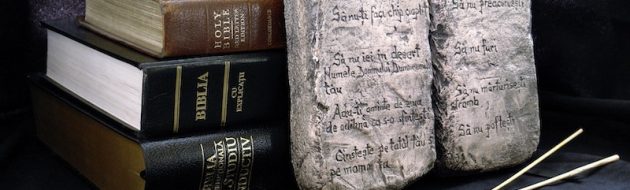
There is an excellent article in the back of the Aramaic English New Testament by Andrew Gabriel Roth called “How much Torah do Christians already keep?”
Up to 87% of the Torah is kept by some of the Christian community. In this video I discuss this topic.
If the law is done away with, why are Christians keeping so many of them?
Exodus 21
Exodus 21
Fair Treatment of Slaves
1 “These are the regulations you must present to Israel.
2 “If you buy a Hebrew slave, he may serve for no more than six years. Set him free in the seventh year, and he will owe you nothing for his freedom. 3 If he was single when he became your slave, he shall leave single. But if he was married before he became a slave, then his wife must be freed with him.
4 “If his master gave him a wife while he was a slave and they had sons or daughters, then only the man will be free in the seventh year, but his wife and children will still belong to his master. 5 But the slave may declare, ‘I love my master, my wife, and my children. I don’t want to go free.’ 6 If he does this, his master must present him before God.[a] Then his master must take him to the door or doorpost and publicly pierce his ear with an awl. After that, the slave will serve his master for life.
7 “When a man sells his daughter as a slave, she will not be freed at the end of six years as the men are. 8 If she does not satisfy her owner, he must allow her to be bought back again. But he is not allowed to sell her to foreigners, since he is the one who broke the contract with her. 9 But if the slave’s owner arranges for her to marry his son, he may no longer treat her as a slave but as a daughter.
10 “If a man who has married a slave wife takes another wife for himself, he must not neglect the rights of the first wife to food, clothing, and sexual intimacy. 11 If he fails in any of these three obligations, she may leave as a free woman without making any payment.
Cases of Personal Injury
12 “Anyone who assaults and kills another person must be put to death. 13 But if it was simply an accident permitted by God, I will appoint a place of refuge where the slayer can run for safety. 14 However, if someone deliberately kills another person, then the slayer must be dragged even from my altar and be put to death.
15 “Anyone who strikes father or mother must be put to death.
16 “Kidnappers must be put to death, whether they are caught in possession of their victims or have already sold them as slaves.
17 “Anyone who dishonors[b] father or mother must be put to death.
18 “Now suppose two men quarrel, and one hits the other with a stone or fist, and the injured person does not die but is confined to bed. 19 If he is later able to walk outside again, even with a crutch, the assailant will not be punished but must compensate his victim for lost wages and provide for his full recovery.
20 “If a man beats his male or female slave with a club and the slave dies as a result, the owner must be punished. 21 But if the slave recovers within a day or two, then the owner shall not be punished, since the slave is his property.
22 “Now suppose two men are fighting, and in the process they accidentally strike a pregnant woman so she gives birth prematurely.[c] If no further injury results, the man who struck the woman must pay the amount of compensation the woman’s husband demands and the judges approve. 23 But if there is further injury, the punishment must match the injury: a life for a life, 24 an eye for an eye, a tooth for a tooth, a hand for a hand, a foot for a foot, 25 a burn for a burn, a wound for a wound, a bruise for a bruise.
26 “If a man hits his male or female slave in the eye and the eye is blinded, he must let the slave go free to compensate for the eye. 27 And if a man knocks out the tooth of his male or female slave, he must let the slave go free to compensate for the tooth.
28 “If an ox[d] gores a man or woman to death, the ox must be stoned, and its flesh may not be eaten. In such a case, however, the owner will not be held liable. 29 But suppose the ox had a reputation for goring, and the owner had been informed but failed to keep it under control. If the ox then kills someone, it must be stoned, and the owner must also be put to death. 30 However, the dead person’s relatives may accept payment to compensate for the loss of life. The owner of the ox may redeem his life by paying whatever is demanded.
31 “The same regulation applies if the ox gores a boy or a girl. 32 But if the ox gores a slave, either male or female, the animal’s owner must pay the slave’s owner thirty silver coins,[e] and the ox must be stoned.
33 “Suppose someone digs or uncovers a pit and fails to cover it, and then an ox or a donkey falls into it. 34 The owner of the pit must pay full compensation to the owner of the animal, but then he gets to keep the dead animal.
35 “If someone’s ox injures a neighbor’s ox and the injured ox dies, then the two owners must sell the live ox and divide the price equally between them. They must also divide the dead animal. 36 But if the ox had a reputation for goring, yet its owner failed to keep it under control, he must pay full compensation—a live ox for the dead one—but he may keep the dead ox.
Footnotes:
- 21:6 Or before the judges.
- 21:17 Greek version reads Anyone who speaks disrespectfully of. Compare Matt 15:4; Mark 7:10.
- 21:22 Or so she has a miscarriage; Hebrew reads so her children come out.
- 21:28 Or bull, or cow; also in 21:29-36.
- 21:32 Hebrew 30 shekels of silver, about 12 ounces or 342 grams in weight.