



Tag Archives: for christians
Acts 13 Daily Bible Reading with Paul Nison
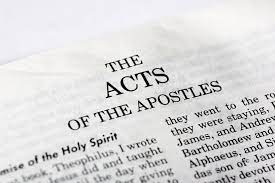
Barnabas and Saul Are Commissioned
13 Among the prophets and teachers of the church at Antioch of Syria were Barnabas, Simeon (called “the black man”[a]), Lucius (from Cyrene), Manaen (the childhood companion of King Herod Antipas[b]), and Saul. 2 One day as these men were worshiping the Lord and fasting, the Holy Spirit said, “Appoint Barnabas and Saul for the special work to which I have called them.” 3 So after more fasting and prayer, the men laid their hands on them and sent them on their way.
Paul’s First Missionary Journey
4 So Barnabas and Saul were sent out by the Holy Spirit. They went down to the seaport of Seleucia and then sailed for the island of Cyprus. 5 There, in the town of Salamis, they went to the Jewish synagogues and preached the word of God. John Mark went with them as their assistant.
6 Afterward they traveled from town to town across the entire island until finally they reached Paphos, where they met a Jewish sorcerer, a false prophet named Bar-Jesus. 7 He had attached himself to the governor, Sergius Paulus, who was an intelligent man. The governor invited Barnabas and Saul to visit him, for he wanted to hear the word of God. 8 But Elymas, the sorcerer (as his name means in Greek), interfered and urged the governor to pay no attention to what Barnabas and Saul said. He was trying to keep the governor from believing.
9 Saul, also known as Paul, was filled with the Holy Spirit, and he looked the sorcerer in the eye. 10 Then he said, “You son of the devil, full of every sort of deceit and fraud, and enemy of all that is good! Will you never stop perverting the true ways of the Lord? 11 Watch now, for the Lord has laid his hand of punishment upon you, and you will be struck blind. You will not see the sunlight for some time.” Instantly mist and darkness came over the man’s eyes, and he began groping around begging for someone to take his hand and lead him.
12 When the governor saw what had happened, he became a believer, for he was astonished at the teaching about the Lord.
Paul Preaches in Antioch of Pisidia
13 Paul and his companions then left Paphos by ship for Pamphylia, landing at the port town of Perga. There John Mark left them and returned to Jerusalem. 14 But Paul and Barnabas traveled inland to Antioch of Pisidia.[c]
On the Sabbath they went to the synagogue for the services. 15 After the usual readings from the books of Moses[d] and the prophets, those in charge of the service sent them this message: “Brothers, if you have any word of encouragement for the people, come and give it.”
16 So Paul stood, lifted his hand to quiet them, and started speaking. “Men of Israel,” he said, “and you God-fearing Gentiles, listen to me.
17 “The God of this nation of Israel chose our ancestors and made them multiply and grow strong during their stay in Egypt. Then with a powerful arm he led them out of their slavery. 18 He put up with them[e] through forty years of wandering in the wilderness. 19 Then he destroyed seven nations in Canaan and gave their land to Israel as an inheritance. 20 All this took about 450 years.
“After that, God gave them judges to rule until the time of Samuel the prophet. 21 Then the people begged for a king, and God gave them Saul son of Kish, a man of the tribe of Benjamin, who reigned for forty years. 22 But God removed Saul and replaced him with David, a man about whom God said, ‘I have found David son of Jesse, a man after my own heart. He will do everything I want him to do.’[f]
23 “And it is one of King David’s descendants, Jesus, who is God’s promised Savior of Israel! 24 Before he came, John the Baptist preached that all the people of Israel needed to repent of their sins and turn to God and be baptized. 25 As John was finishing his ministry he asked, ‘Do you think I am the Messiah? No, I am not! But he is coming soon—and I’m not even worthy to be his slave and untie the sandals on his feet.’
26 “Brothers—you sons of Abraham, and also you God-fearing Gentiles—this message of salvation has been sent to us! 27 The people in Jerusalem and their leaders did not recognize Jesus as the one the prophets had spoken about. Instead, they condemned him, and in doing this they fulfilled the prophets’ words that are read every Sabbath. 28 They found no legal reason to execute him, but they asked Pilate to have him killed anyway.
29 “When they had done all that the prophecies said about him, they took him down from the cross[g] and placed him in a tomb. 30 But God raised him from the dead! 31 And over a period of many days he appeared to those who had gone with him from Galilee to Jerusalem. They are now his witnesses to the people of Israel.
32 “And now we are here to bring you this Good News. The promise was made to our ancestors, 33 and God has now fulfilled it for us, their descendants, by raising Jesus. This is what the second psalm says about Jesus:
‘You are my Son.
Today I have become your Father.[h]’
34 For God had promised to raise him from the dead, not leaving him to rot in the grave. He said, ‘I will give you the sacred blessings I promised to David.’[i] 35 Another psalm explains it more fully: ‘You will not allow your Holy One to rot in the grave.’[j] 36 This is not a reference to David, for after David had done the will of God in his own generation, he died and was buried with his ancestors, and his body decayed. 37 No, it was a reference to someone else—someone whom God raised and whose body did not decay.
38 [k]“Brothers, listen! We are here to proclaim that through this man Jesus there is forgiveness for your sins. 39 Everyone who believes in him is made right in God’s sight—something the law of Moses could never do. 40 Be careful! Don’t let the prophets’ words apply to you. For they said,
41 ‘Look, you mockers,
be amazed and die!
For I am doing something in your own day,
something you wouldn’t believe
even if someone told you about it.’[l]”
42 As Paul and Barnabas left the synagogue that day, the people begged them to speak about these things again the next week. 43 Many Jews and devout converts to Judaism followed Paul and Barnabas, and the two men urged them to continue to rely on the grace of God.
Paul Turns to the Gentiles
44 The following week almost the entire city turned out to hear them preach the word of the Lord. 45 But when some of the Jews saw the crowds, they were jealous; so they slandered Paul and argued against whatever he said.
46 Then Paul and Barnabas spoke out boldly and declared, “It was necessary that we first preach the word of God to you Jews. But since you have rejected it and judged yourselves unworthy of eternal life, we will offer it to the Gentiles. 47 For the Lord gave us this command when he said,
‘I have made you a light to the Gentiles,
to bring salvation to the farthest corners of the earth.’[m]”
48 When the Gentiles heard this, they were very glad and thanked the Lord for his message; and all who were chosen for eternal life became believers. 49 So the Lord’s message spread throughout that region.
50 Then the Jews stirred up the influential religious women and the leaders of the city, and they incited a mob against Paul and Barnabas and ran them out of town. 51 So they shook the dust from their feet as a sign of rejection and went to the town of Iconium. 52 And the believers[n] were filled with joy and with the Holy Spirit.
Footnotes
- 13:1a Greek who was called Niger.
- 13:1b Greek Herod the tetrarch.
- 13:13-14 Pamphylia and Pisidia were districts in what is now Turkey.
- 13:15 Greek from the law.
- 13:18 Some manuscripts read He cared for them; compare Deut 1:31.
- 13:22 1 Sam 13:14.
- 13:29 Greek from the tree.
- 13:33 Or Today I reveal you as my Son. Ps 2:7.
- 13:34 Isa 55:3.
- 13:35 Ps 16:10.
- 13:38 English translations divide verses 38 and 39 in various ways.
- 13:41 Hab 1:5 (Greek version).
- 13:47 Isa 49:6.
- 13:52 Greek the disciples.
Are Christians Under The Law?

Are Christians Under The Law?
Acts 12 Daily Bible Reading with Paul Nison
James Is Killed and Peter Is Imprisoned
12 About that time King Herod Agrippa[a] began to persecute some believers in the church. 2 He had the apostle James (John’s brother) killed with a sword. 3 When Herod saw how much this pleased the Jewish people, he also arrested Peter. (This took place during the Passover celebration.[b]) 4 Then he imprisoned him, placing him under the guard of four squads of four soldiers each. Herod intended to bring Peter out for public trial after the Passover. 5 But while Peter was in prison, the church prayed very earnestly for him.
Peter’s Miraculous Escape from Prison
6 The night before Peter was to be placed on trial, he was asleep, fastened with two chains between two soldiers. Others stood guard at the prison gate. 7 Suddenly, there was a bright light in the cell, and an angel of the Lord stood before Peter. The angel struck him on the side to awaken him and said, “Quick! Get up!” And the chains fell off his wrists. 8 Then the angel told him, “Get dressed and put on your sandals.” And he did. “Now put on your coat and follow me,” the angel ordered.
9 So Peter left the cell, following the angel. But all the time he thought it was a vision. He didn’t realize it was actually happening. 10 They passed the first and second guard posts and came to the iron gate leading to the city, and this opened for them all by itself. So they passed through and started walking down the street, and then the angel suddenly left him.
11 Peter finally came to his senses. “It’s really true!” he said. “The Lord has sent his angel and saved me from Herod and from what the Jewish leaders[c] had planned to do to me!”
12 When he realized this, he went to the home of Mary, the mother of John Mark, where many were gathered for prayer. 13 He knocked at the door in the gate, and a servant girl named Rhoda came to open it. 14 When she recognized Peter’s voice, she was so overjoyed that, instead of opening the door, she ran back inside and told everyone, “Peter is standing at the door!”
15 “You’re out of your mind!” they said. When she insisted, they decided, “It must be his angel.”
16 Meanwhile, Peter continued knocking. When they finally opened the door and saw him, they were amazed. 17 He motioned for them to quiet down and told them how the Lord had led him out of prison. “Tell James and the other brothers what happened,” he said. And then he went to another place.
18 At dawn there was a great commotion among the soldiers about what had happened to Peter. 19 Herod Agrippa ordered a thorough search for him. When he couldn’t be found, Herod interrogated the guards and sentenced them to death. Afterward Herod left Judea to stay in Caesarea for a while.
The Death of Herod Agrippa
20 Now Herod was very angry with the people of Tyre and Sidon. So they sent a delegation to make peace with him because their cities were dependent upon Herod’s country for food. The delegates won the support of Blastus, Herod’s personal assistant, 21 and an appointment with Herod was granted. When the day arrived, Herod put on his royal robes, sat on his throne, and made a speech to them. 22 The people gave him a great ovation, shouting, “It’s the voice of a god, not of a man!”
23 Instantly, an angel of the Lord struck Herod with a sickness, because he accepted the people’s worship instead of giving the glory to God. So he was consumed with worms and died.
24 Meanwhile, the word of God continued to spread, and there were many new believers.
25 When Barnabas and Saul had finished their mission to Jerusalem, they returned,[d] taking John Mark with them.
Footnotes
- 12:1 Greek Herod the king. He was the nephew of Herod Antipas and a grandson of Herod the Great.
- 12:3 Greek the days of unleavened bread.
- 12:11 Or the Jewish people.
- 12:25 Or mission, they returned to Jerusalem. Other manuscripts read mission, they returned from Jerusalem; still others read mission, they returned from Jerusalem to Antioch.
We need to get back to the Bible Roles of Men and Women

We need to get back to the Bible Roles of Men and Women
Acts 11 Daily Bible Reading with Paul Nison
Peter Explains His Actions
11 Soon the news reached the apostles and other believers[a] in Judea that the Gentiles had received the word of God. 2 But when Peter arrived back in Jerusalem, the Jewish believers[b] criticized him. 3 “You entered the home of Gentiles[c] and even ate with them!” they said.
4 Then Peter told them exactly what had happened. 5 “I was in the town of Joppa,” he said, “and while I was praying, I went into a trance and saw a vision. Something like a large sheet was let down by its four corners from the sky. And it came right down to me. 6 When I looked inside the sheet, I saw all sorts of tame and wild animals, reptiles, and birds. 7 And I heard a voice say, ‘Get up, Peter; kill and eat them.’
8 “‘No, Lord,’ I replied. ‘I have never eaten anything that our Jewish laws have declared impure or unclean.[d]’
9 “But the voice from heaven spoke again: ‘Do not call something unclean if God has made it clean.’ 10 This happened three times before the sheet and all it contained was pulled back up to heaven.
11 “Just then three men who had been sent from Caesarea arrived at the house where we were staying. 12 The Holy Spirit told me to go with them and not to worry that they were Gentiles. These six brothers here accompanied me, and we soon entered the home of the man who had sent for us. 13 He told us how an angel had appeared to him in his home and had told him, ‘Send messengers to Joppa, and summon a man named Simon Peter. 14 He will tell you how you and everyone in your household can be saved!’
15 “As I began to speak,” Peter continued, “the Holy Spirit fell on them, just as he fell on us at the beginning. 16 Then I thought of the Lord’s words when he said, ‘John baptized with[e] water, but you will be baptized with the Holy Spirit.’ 17 And since God gave these Gentiles the same gift he gave us when we believed in the Lord Jesus Christ, who was I to stand in God’s way?”
18 When the others heard this, they stopped objecting and began praising God. They said, “We can see that God has also given the Gentiles the privilege of repenting of their sins and receiving eternal life.”
The Church in Antioch of Syria
19 Meanwhile, the believers who had been scattered during the persecution after Stephen’s death traveled as far as Phoenicia, Cyprus, and Antioch of Syria. They preached the word of God, but only to Jews. 20 However, some of the believers who went to Antioch from Cyprus and Cyrene began preaching to the Gentiles[f] about the Lord Jesus. 21 The power of the Lord was with them, and a large number of these Gentiles believed and turned to the Lord.
22 When the church at Jerusalem heard what had happened, they sent Barnabas to Antioch. 23 When he arrived and saw this evidence of God’s blessing, he was filled with joy, and he encouraged the believers to stay true to the Lord. 24 Barnabas was a good man, full of the Holy Spirit and strong in faith. And many people were brought to the Lord.
25 Then Barnabas went on to Tarsus to look for Saul. 26 When he found him, he brought him back to Antioch. Both of them stayed there with the church for a full year, teaching large crowds of people. (It was at Antioch that the believers[g] were first called Christians.)
27 During this time some prophets traveled from Jerusalem to Antioch. 28 One of them named Agabus stood up in one of the meetings and predicted by the Spirit that a great famine was coming upon the entire Roman world. (This was fulfilled during the reign of Claudius.) 29 So the believers in Antioch decided to send relief to the brothers and sisters[h] in Judea, everyone giving as much as they could. 30 This they did, entrusting their gifts to Barnabas and Saul to take to the elders of the church in Jerusalem.
Footnotes
- 11:1 Greek brothers.
- 11:2 Greek those of the circumcision.
- 11:3 Greek of uncircumcised men.
- 11:8 Greek anything common or unclean.
- 11:16 Or in; also in 11:16b.
- 11:20 Greek the Hellenists (i.e., those who speak Greek); other manuscripts read the Greeks.
- 11:26 Greek disciples; also in 11:29.
- 11:29 Greek the brothers.
Should we fellowship with Sabbath Breakers

Should we fellowship with Sabbath Breakers
Bible Discussion: How Women should act according to The Scriptures

According to the Bible women should be, quiet, keepers at home, submissive to husbands, silent in church, care-takers of children, modestly dressed. I open up the zoom room to discuss this topic with anyone who would like to talk about how women should be according to the scriptures.
Men, would you pursue a woman who practiced extreme modesty

Thank you so much for your response and consideration on this topic of discussion. I’m excited to hear feedback from both both single men seeking wives or currently married men on this topic. Did married men pursue their wife before or after she practiced modesty? While a lot of men in my singles group profess the importance of having a changed heart and women dressed modestly as not being a deterrent, they will then add it’s not a commandment to dress that way, it’s just tradition. Without saying it, they’re demonstrating their preference isn’t modesty. This isn’t surprising; and there isn’t anything wrong with it either. Some men clearly prefer to see hair and more skin. But I can’t help but wonder if “looking Muslim” isn’t the only factor keeping women from covering.
Acts 7 Daily Bible Reading with paul Nison
Stephen Addresses the Council
7 Then the high priest asked Stephen, “Are these accusations true?”
2 This was Stephen’s reply: “Brothers and fathers, listen to me. Our glorious God appeared to our ancestor Abraham in Mesopotamia before he settled in Haran.[a] 3 God told him, ‘Leave your native land and your relatives, and come into the land that I will show you.’[b] 4 So Abraham left the land of the Chaldeans and lived in Haran until his father died. Then God brought him here to the land where you now live.
5 “But God gave him no inheritance here, not even one square foot of land. God did promise, however, that eventually the whole land would belong to Abraham and his descendants—even though he had no children yet. 6 God also told him that his descendants would live in a foreign land, where they would be oppressed as slaves for 400 years. 7 ‘But I will punish the nation that enslaves them,’ God said, ‘and in the end they will come out and worship me here in this place.’[c]
8 “God also gave Abraham the covenant of circumcision at that time. So when Abraham became the father of Isaac, he circumcised him on the eighth day. And the practice was continued when Isaac became the father of Jacob, and when Jacob became the father of the twelve patriarchs of the Israelite nation.
9 “These patriarchs were jealous of their brother Joseph, and they sold him to be a slave in Egypt. But God was with him 10 and rescued him from all his troubles. And God gave him favor before Pharaoh, king of Egypt. God also gave Joseph unusual wisdom, so that Pharaoh appointed him governor over all of Egypt and put him in charge of the palace.
11 “But a famine came upon Egypt and Canaan. There was great misery, and our ancestors ran out of food. 12 Jacob heard that there was still grain in Egypt, so he sent his sons—our ancestors—to buy some. 13 The second time they went, Joseph revealed his identity to his brothers,[d] and they were introduced to Pharaoh. 14 Then Joseph sent for his father, Jacob, and all his relatives to come to Egypt, seventy-five persons in all. 15 So Jacob went to Egypt. He died there, as did our ancestors. 16 Their bodies were taken to Shechem and buried in the tomb Abraham had bought for a certain price from Hamor’s sons in Shechem.
17 “As the time drew near when God would fulfill his promise to Abraham, the number of our people in Egypt greatly increased. 18 But then a new king came to the throne of Egypt who knew nothing about Joseph. 19 This king exploited our people and oppressed them, forcing parents to abandon their newborn babies so they would die.
20 “At that time Moses was born—a beautiful child in God’s eyes. His parents cared for him at home for three months. 21 When they had to abandon him, Pharaoh’s daughter adopted him and raised him as her own son. 22 Moses was taught all the wisdom of the Egyptians, and he was powerful in both speech and action.
23 “One day when Moses was forty years old, he decided to visit his relatives, the people of Israel. 24 He saw an Egyptian mistreating an Israelite. So Moses came to the man’s defense and avenged him, killing the Egyptian. 25 Moses assumed his fellow Israelites would realize that God had sent him to rescue them, but they didn’t.
26 “The next day he visited them again and saw two men of Israel fighting. He tried to be a peacemaker. ‘Men,’ he said, ‘you are brothers. Why are you fighting each other?’
27 “But the man in the wrong pushed Moses aside. ‘Who made you a ruler and judge over us?’ he asked. 28 ‘Are you going to kill me as you killed that Egyptian yesterday?’ 29 When Moses heard that, he fled the country and lived as a foreigner in the land of Midian. There his two sons were born.
30 “Forty years later, in the desert near Mount Sinai, an angel appeared to Moses in the flame of a burning bush. 31 When Moses saw it, he was amazed at the sight. As he went to take a closer look, the voice of the Lord called out to him, 32 ‘I am the God of your ancestors—the God of Abraham, Isaac, and Jacob.’ Moses shook with terror and did not dare to look.
33 “Then the Lord said to him, ‘Take off your sandals, for you are standing on holy ground. 34 I have certainly seen the oppression of my people in Egypt. I have heard their groans and have come down to rescue them. Now go, for I am sending you back to Egypt.’[e]
35 “So God sent back the same man his people had previously rejected when they demanded, ‘Who made you a ruler and judge over us?’ Through the angel who appeared to him in the burning bush, God sent Moses to be their ruler and savior. 36 And by means of many wonders and miraculous signs, he led them out of Egypt, through the Red Sea, and through the wilderness for forty years.
37 “Moses himself told the people of Israel, ‘God will raise up for you a Prophet like me from among your own people.’[f] 38 Moses was with our ancestors, the assembly of God’s people in the wilderness, when the angel spoke to him at Mount Sinai. And there Moses received life-giving words to pass on to us.[g]
39 “But our ancestors refused to listen to Moses. They rejected him and wanted to return to Egypt. 40 They told Aaron, ‘Make us some gods who can lead us, for we don’t know what has become of this Moses, who brought us out of Egypt.’ 41 So they made an idol shaped like a calf, and they sacrificed to it and celebrated over this thing they had made. 42 Then God turned away from them and abandoned them to serve the stars of heaven as their gods! In the book of the prophets it is written,
‘Was it to me you were bringing sacrifices and offerings
during those forty years in the wilderness, Israel?
43 No, you carried your pagan gods—
the shrine of Molech,
the star of your god Rephan,
and the images you made to worship them.
So I will send you into exile
as far away as Babylon.’[h]
44 “Our ancestors carried the Tabernacle[i] with them through the wilderness. It was constructed according to the plan God had shown to Moses. 45 Years later, when Joshua led our ancestors in battle against the nations that God drove out of this land, the Tabernacle was taken with them into their new territory. And it stayed there until the time of King David.
46 “David found favor with God and asked for the privilege of building a permanent Temple for the God of Jacob.[j] 47 But it was Solomon who actually built it. 48 However, the Most High doesn’t live in temples made by human hands. As the prophet says,
49 ‘Heaven is my throne,
and the earth is my footstool.
Could you build me a temple as good as that?’
asks the Lord.
‘Could you build me such a resting place?
50 Didn’t my hands make both heaven and earth?’[k]
51 “You stubborn people! You are heathen[l] at heart and deaf to the truth. Must you forever resist the Holy Spirit? That’s what your ancestors did, and so do you! 52 Name one prophet your ancestors didn’t persecute! They even killed the ones who predicted the coming of the Righteous One—the Messiah whom you betrayed and murdered. 53 You deliberately disobeyed God’s law, even though you received it from the hands of angels.”
54 The Jewish leaders were infuriated by Stephen’s accusation, and they shook their fists at him in rage.[m] 55 But Stephen, full of the Holy Spirit, gazed steadily into heaven and saw the glory of God, and he saw Jesus standing in the place of honor at God’s right hand. 56 And he told them, “Look, I see the heavens opened and the Son of Man standing in the place of honor at God’s right hand!”
57 Then they put their hands over their ears and began shouting. They rushed at him 58 and dragged him out of the city and began to stone him. His accusers took off their coats and laid them at the feet of a young man named Saul.[n]
59 As they stoned him, Stephen prayed, “Lord Jesus, receive my spirit.” 60 He fell to his knees, shouting, “Lord, don’t charge them with this sin!” And with that, he died.
Footnotes
- 7:2 Mesopotamia was the region now called Iraq. Haran was a city in what is now called Syria.
- 7:3 Gen 12:1.
- 7:5-7 Gen 12:7; 15:13-14; Exod 3:12.
- 7:13 Other manuscripts read Joseph was recognized by his brothers.
- 7:31-34 Exod 3:5-10.
- 7:37 Deut 18:15.
- 7:38 Some manuscripts read to you.
- 7:42-43 Amos 5:25-27 (Greek version).
- 7:44 Greek the tent of witness.
- 7:46 Some manuscripts read the house of Jacob.
- 7:49-50 Isa 66:1-2.
- 7:51 Greek uncircumcised.
- 7:54 Greek they were grinding their teeth against him.
- 7:58 Saul is later called Paul; see 13:9.…
Acts 5 Daily Bible Reading with Paul Nison
Ananias and Sapphira
5 But there was a certain man named Ananias who, with his wife, Sapphira, sold some property. 2 He brought part of the money to the apostles, claiming it was the full amount. With his wife’s consent, he kept the rest.
3 Then Peter said, “Ananias, why have you let Satan fill your heart? You lied to the Holy Spirit, and you kept some of the money for yourself. 4 The property was yours to sell or not sell, as you wished. And after selling it, the money was also yours to give away. How could you do a thing like this? You weren’t lying to us but to God!”
5 As soon as Ananias heard these words, he fell to the floor and died. Everyone who heard about it was terrified. 6 Then some young men got up, wrapped him in a sheet, and took him out and buried him.
7 About three hours later his wife came in, not knowing what had happened. 8 Peter asked her, “Was this the price you and your husband received for your land?”
“Yes,” she replied, “that was the price.”
9 And Peter said, “How could the two of you even think of conspiring to test the Spirit of the Lord like this? The young men who buried your husband are just outside the door, and they will carry you out, too.”
10 Instantly, she fell to the floor and died. When the young men came in and saw that she was dead, they carried her out and buried her beside her husband. 11 Great fear gripped the entire church and everyone else who heard what had happened.
The Apostles Heal Many
12 The apostles were performing many miraculous signs and wonders among the people. And all the believers were meeting regularly at the Temple in the area known as Solomon’s Colonnade. 13 But no one else dared to join them, even though all the people had high regard for them. 14 Yet more and more people believed and were brought to the Lord—crowds of both men and women. 15 As a result of the apostles’ work, sick people were brought out into the streets on beds and mats so that Peter’s shadow might fall across some of them as he went by. 16 Crowds came from the villages around Jerusalem, bringing their sick and those possessed by evil[a] spirits, and they were all healed.
The Apostles Meet Opposition
17 The high priest and his officials, who were Sadducees, were filled with jealousy. 18 They arrested the apostles and put them in the public jail. 19 But an angel of the Lord came at night, opened the gates of the jail, and brought them out. Then he told them, 20 “Go to the Temple and give the people this message of life!”
21 So at daybreak the apostles entered the Temple, as they were told, and immediately began teaching.
When the high priest and his officials arrived, they convened the high council[b]—the full assembly of the elders of Israel. Then they sent for the apostles to be brought from the jail for trial. 22 But when the Temple guards went to the jail, the men were gone. So they returned to the council and reported, 23 “The jail was securely locked, with the guards standing outside, but when we opened the gates, no one was there!”
24 When the captain of the Temple guard and the leading priests heard this, they were perplexed, wondering where it would all end. 25 Then someone arrived with startling news: “The men you put in jail are standing in the Temple, teaching the people!”
26 The captain went with his Temple guards and arrested the apostles, but without violence, for they were afraid the people would stone them. 27 Then they brought the apostles before the high council, where the high priest confronted them. 28 “We gave you strict orders never again to teach in this man’s name!” he said. “Instead, you have filled all Jerusalem with your teaching about him, and you want to make us responsible for his death!”
29 But Peter and the apostles replied, “We must obey God rather than any human authority. 30 The God of our ancestors raised Jesus from the dead after you killed him by hanging him on a cross.[c] 31 Then God put him in the place of honor at his right hand as Prince and Savior. He did this so the people of Israel would repent of their sins and be forgiven. 32 We are witnesses of these things and so is the Holy Spirit, who is given by God to those who obey him.”
33 When they heard this, the high council was furious and decided to kill them. 34 But one member, a Pharisee named Gamaliel, who was an expert in religious law and respected by all the people, stood up and ordered that the men be sent outside the council chamber for a while. 35 Then he said to his colleagues, “Men of Israel, take care what you are planning to do to these men! 36 Some time ago there was that fellow Theudas, who pretended to be someone great. About 400 others joined him, but he was killed, and all his followers went their various ways. The whole movement came to nothing. 37 After him, at the time of the census, there was Judas of Galilee. He got people to follow him, but he was killed, too, and all his followers were scattered.
38 “So my advice is, leave these men alone. Let them go. If they are planning and doing these things merely on their own, it will soon be overthrown. 39 But if it is from God, you will not be able to overthrow them. You may even find yourselves fighting against God!”
40 The others accepted his advice. They called in the apostles and had them flogged. Then they ordered them never again to speak in the name of Jesus, and they let them go.
41 The apostles left the high council rejoicing that God had counted them worthy to suffer disgrace for the name of Jesus.[d] 42 And every day, in the Temple and from house to house, they continued to teach and preach this message: “Jesus is the Messiah.”