



Tag Archives: for christians
Acts 26 Daily Bible Reading with Paul Nison
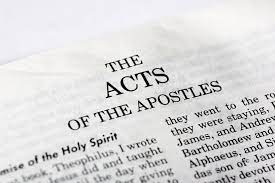
26 Then Agrippa said to Paul, “You may speak in your defense.”
So Paul, gesturing with his hand, started his defense: 2 “I am fortunate, King Agrippa, that you are the one hearing my defense today against all these accusations made by the Jewish leaders, 3 for I know you are an expert on all Jewish customs and controversies. Now please listen to me patiently!
4 “As the Jewish leaders are well aware, I was given a thorough Jewish training from my earliest childhood among my own people and in Jerusalem. 5 If they would admit it, they know that I have been a member of the Pharisees, the strictest sect of our religion. 6 Now I am on trial because of my hope in the fulfillment of God’s promise made to our ancestors. 7 In fact, that is why the twelve tribes of Israel zealously worship God night and day, and they share the same hope I have. Yet, Your Majesty, they accuse me for having this hope! 8 Why does it seem incredible to any of you that God can raise the dead?
9 “I used to believe that I ought to do everything I could to oppose the very name of Jesus the Nazarene.[a] 10 Indeed, I did just that in Jerusalem. Authorized by the leading priests, I caused many believers[b] there to be sent to prison. And I cast my vote against them when they were condemned to death. 11 Many times I had them punished in the synagogues to get them to curse Jesus.[c] I was so violently opposed to them that I even chased them down in foreign cities.
12 “One day I was on such a mission to Damascus, armed with the authority and commission of the leading priests. 13 About noon, Your Majesty, as I was on the road, a light from heaven brighter than the sun shone down on me and my companions. 14 We all fell down, and I heard a voice saying to me in Aramaic,[d] ‘Saul, Saul, why are you persecuting me? It is useless for you to fight against my will.[e]’
15 “‘Who are you, lord?’ I asked.
“And the Lord replied, ‘I am Jesus, the one you are persecuting. 16 Now get to your feet! For I have appeared to you to appoint you as my servant and witness. Tell people that you have seen me, and tell them what I will show you in the future. 17 And I will rescue you from both your own people and the Gentiles. Yes, I am sending you to the Gentiles 18 to open their eyes, so they may turn from darkness to light and from the power of Satan to God. Then they will receive forgiveness for their sins and be given a place among God’s people, who are set apart by faith in me.’
19 “And so, King Agrippa, I obeyed that vision from heaven. 20 I preached first to those in Damascus, then in Jerusalem and throughout all Judea, and also to the Gentiles, that all must repent of their sins and turn to God—and prove they have changed by the good things they do. 21 Some Jews arrested me in the Temple for preaching this, and they tried to kill me. 22 But God has protected me right up to this present time so I can testify to everyone, from the least to the greatest. I teach nothing except what the prophets and Moses said would happen— 23 that the Messiah would suffer and be the first to rise from the dead, and in this way announce God’s light to Jews and Gentiles alike.”
24 Suddenly, Festus shouted, “Paul, you are insane. Too much study has made you crazy!”
25 But Paul replied, “I am not insane, Most Excellent Festus. What I am saying is the sober truth. 26 And King Agrippa knows about these things. I speak boldly, for I am sure these events are all familiar to him, for they were not done in a corner! 27 King Agrippa, do you believe the prophets? I know you do—”
28 Agrippa interrupted him. “Do you think you can persuade me to become a Christian so quickly?”[f]
29 Paul replied, “Whether quickly or not, I pray to God that both you and everyone here in this audience might become the same as I am, except for these chains.”
30 Then the king, the governor, Bernice, and all the others stood and left. 31 As they went out, they talked it over and agreed, “This man hasn’t done anything to deserve death or imprisonment.”
32 And Agrippa said to Festus, “He could have been set free if he hadn’t appealed to Caesar.”
Acts 25 Daily Bible Reading with Paul Nison
Paul Appears before Festus
25 Three days after Festus arrived in Caesarea to take over his new responsibilities, he left for Jerusalem, 2 where the leading priests and other Jewish leaders met with him and made their accusations against Paul. 3 They asked Festus as a favor to transfer Paul to Jerusalem (planning to ambush and kill him on the way). 4 But Festus replied that Paul was at Caesarea and he himself would be returning there soon. 5 So he said, “Those of you in authority can return with me. If Paul has done anything wrong, you can make your accusations.”
6 About eight or ten days later Festus returned to Caesarea, and on the following day he took his seat in court and ordered that Paul be brought in. 7 When Paul arrived, the Jewish leaders from Jerusalem gathered around and made many serious accusations they couldn’t prove.
8 Paul denied the charges. “I am not guilty of any crime against the Jewish laws or the Temple or the Roman government,” he said.
9 Then Festus, wanting to please the Jews, asked him, “Are you willing to go to Jerusalem and stand trial before me there?”
10 But Paul replied, “No! This is the official Roman court, so I ought to be tried right here. You know very well I am not guilty of harming the Jews. 11 If I have done something worthy of death, I don’t refuse to die. But if I am innocent, no one has a right to turn me over to these men to kill me. I appeal to Caesar!”
12 Festus conferred with his advisers and then replied, “Very well! You have appealed to Caesar, and to Caesar you will go!”
13 A few days later King Agrippa arrived with his sister, Bernice,[a] to pay their respects to Festus. 14 During their stay of several days, Festus discussed Paul’s case with the king. “There is a prisoner here,” he told him, “whose case was left for me by Felix. 15 When I was in Jerusalem, the leading priests and Jewish elders pressed charges against him and asked me to condemn him. 16 I pointed out to them that Roman law does not convict people without a trial. They must be given an opportunity to confront their accusers and defend themselves.
17 “When his accusers came here for the trial, I didn’t delay. I called the case the very next day and ordered Paul brought in. 18 But the accusations made against him weren’t any of the crimes I expected. 19 Instead, it was something about their religion and a dead man named Jesus, who Paul insists is alive. 20 I was at a loss to know how to investigate these things, so I asked him whether he would be willing to stand trial on these charges in Jerusalem. 21 But Paul appealed to have his case decided by the emperor. So I ordered that he be held in custody until I could arrange to send him to Caesar.”
22 “I’d like to hear the man myself,” Agrippa said.
And Festus replied, “You will—tomorrow!”
Paul Speaks to Agrippa
23 So the next day Agrippa and Bernice arrived at the auditorium with great pomp, accompanied by military officers and prominent men of the city. Festus ordered that Paul be brought in. 24 Then Festus said, “King Agrippa and all who are here, this is the man whose death is demanded by all the Jews, both here and in Jerusalem. 25 But in my opinion he has done nothing deserving death. However, since he appealed his case to the emperor, I have decided to send him to Rome.
26 “But what shall I write the emperor? For there is no clear charge against him. So I have brought him before all of you, and especially you, King Agrippa, so that after we examine him, I might have something to write. 27 For it makes no sense to send a prisoner to the emperor without specifying the charges against him!”
Footnotes
- 25:13 Greek Agrippa the king and Bernice arrived.
5 Years Divorced Today, My Feelings and Message

5 Years Divorced Today, My Feelings and Message
Acts 23 Daily Bible Reading with Paul Nison
23 Gazing intently at the high council,[a] Paul began: “Brothers, I have always lived before God with a clear conscience!”
2 Instantly Ananias the high priest commanded those close to Paul to slap him on the mouth. 3 But Paul said to him, “God will slap you, you corrupt hypocrite![b] What kind of judge are you to break the law yourself by ordering me struck like that?”
4 Those standing near Paul said to him, “Do you dare to insult God’s high priest?”
5 “I’m sorry, brothers. I didn’t realize he was the high priest,” Paul replied, “for the Scriptures say, ‘You must not speak evil of any of your rulers.’[c]”
6 Paul realized that some members of the high council were Sadducees and some were Pharisees, so he shouted, “Brothers, I am a Pharisee, as were my ancestors! And I am on trial because my hope is in the resurrection of the dead!”
7 This divided the council—the Pharisees against the Sadducees— 8 for the Sadducees say there is no resurrection or angels or spirits, but the Pharisees believe in all of these. 9 So there was a great uproar. Some of the teachers of religious law who were Pharisees jumped up and began to argue forcefully. “We see nothing wrong with him,” they shouted. “Perhaps a spirit or an angel spoke to him.” 10 As the conflict grew more violent, the commander was afraid they would tear Paul apart. So he ordered his soldiers to go and rescue him by force and take him back to the fortress.
11 That night the Lord appeared to Paul and said, “Be encouraged, Paul. Just as you have been a witness to me here in Jerusalem, you must preach the Good News in Rome as well.”
The Plan to Kill Paul
12 The next morning a group of Jews[d] got together and bound themselves with an oath not to eat or drink until they had killed Paul. 13 There were more than forty of them in the conspiracy. 14 They went to the leading priests and elders and told them, “We have bound ourselves with an oath to eat nothing until we have killed Paul. 15 So you and the high council should ask the commander to bring Paul back to the council again. Pretend you want to examine his case more fully. We will kill him on the way.”
16 But Paul’s nephew—his sister’s son—heard of their plan and went to the fortress and told Paul. 17 Paul called for one of the Roman officers[e] and said, “Take this young man to the commander. He has something important to tell him.”
18 So the officer did, explaining, “Paul, the prisoner, called me over and asked me to bring this young man to you because he has something to tell you.”
19 The commander took his hand, led him aside, and asked, “What is it you want to tell me?”
20 Paul’s nephew told him, “Some Jews are going to ask you to bring Paul before the high council tomorrow, pretending they want to get some more information. 21 But don’t do it! There are more than forty men hiding along the way ready to ambush him. They have vowed not to eat or drink anything until they have killed him. They are ready now, just waiting for your consent.”
22 “Don’t let anyone know you told me this,” the commander warned the young man.
Paul Is Sent to Caesarea
23 Then the commander called two of his officers and ordered, “Get 200 soldiers ready to leave for Caesarea at nine o’clock tonight. Also take 200 spearmen and 70 mounted troops. 24 Provide horses for Paul to ride, and get him safely to Governor Felix.” 25 Then he wrote this letter to the governor:
26 “From Claudius Lysias, to his Excellency, Governor Felix: Greetings!
27 “This man was seized by some Jews, and they were about to kill him when I arrived with the troops. When I learned that he was a Roman citizen, I removed him to safety. 28 Then I took him to their high council to try to learn the basis of the accusations against him. 29 I soon discovered the charge was something regarding their religious law—certainly nothing worthy of imprisonment or death. 30 But when I was informed of a plot to kill him, I immediately sent him on to you. I have told his accusers to bring their charges before you.”
31 So that night, as ordered, the soldiers took Paul as far as Antipatris. 32 They returned to the fortress the next morning, while the mounted troops took him on to Caesarea. 33 When they arrived in Caesarea, they presented Paul and the letter to Governor Felix. 34 He read it and then asked Paul what province he was from. “Cilicia,” Paul answered.
35 “I will hear your case myself when your accusers arrive,” the governor told him. Then the governor ordered him kept in the prison at Herod’s headquarters.[f]
Acts 21 Daily Bible Reading with Paul Nison
Paul’s Journey to Jerusalem
21 After saying farewell to the Ephesian elders, we sailed straight to the island of Cos. The next day we reached Rhodes and then went to Patara. 2 There we boarded a ship sailing for Phoenicia. 3 We sighted the island of Cyprus, passed it on our left, and landed at the harbor of Tyre, in Syria, where the ship was to unload its cargo.
4 We went ashore, found the local believers,[a] and stayed with them a week. These believers prophesied through the Holy Spirit that Paul should not go on to Jerusalem. 5 When we returned to the ship at the end of the week, the entire congregation, including women[b] and children, left the city and came down to the shore with us. There we knelt, prayed, 6 and said our farewells. Then we went aboard, and they returned home.
7 The next stop after leaving Tyre was Ptolemais, where we greeted the brothers and sisters[c] and stayed for one day. 8 The next day we went on to Caesarea and stayed at the home of Philip the Evangelist, one of the seven men who had been chosen to distribute food. 9 He had four unmarried daughters who had the gift of prophecy.
10 Several days later a man named Agabus, who also had the gift of prophecy, arrived from Judea. 11 He came over, took Paul’s belt, and bound his own feet and hands with it. Then he said, “The Holy Spirit declares, ‘So shall the owner of this belt be bound by the Jewish leaders in Jerusalem and turned over to the Gentiles.’” 12 When we heard this, we and the local believers all begged Paul not to go on to Jerusalem.
13 But he said, “Why all this weeping? You are breaking my heart! I am ready not only to be jailed at Jerusalem but even to die for the sake of the Lord Jesus.” 14 When it was clear that we couldn’t persuade him, we gave up and said, “The Lord’s will be done.”
Paul Arrives at Jerusalem
15 After this we packed our things and left for Jerusalem. 16 Some believers from Caesarea accompanied us, and they took us to the home of Mnason, a man originally from Cyprus and one of the early believers. 17 When we arrived, the brothers and sisters in Jerusalem welcomed us warmly.
18 The next day Paul went with us to meet with James, and all the elders of the Jerusalem church were present. 19 After greeting them, Paul gave a detailed account of the things God had accomplished among the Gentiles through his ministry.
20 After hearing this, they praised God. And then they said, “You know, dear brother, how many thousands of Jews have also believed, and they all follow the law of Moses very seriously. 21 But the Jewish believers here in Jerusalem have been told that you are teaching all the Jews who live among the Gentiles to turn their backs on the laws of Moses. They’ve heard that you teach them not to circumcise their children or follow other Jewish customs. 22 What should we do? They will certainly hear that you have come.
23 “Here’s what we want you to do. We have four men here who have completed their vow. 24 Go with them to the Temple and join them in the purification ceremony, paying for them to have their heads ritually shaved. Then everyone will know that the rumors are all false and that you yourself observe the Jewish laws.
25 “As for the Gentile believers, they should do what we already told them in a letter: They should abstain from eating food offered to idols, from consuming blood or the meat of strangled animals, and from sexual immorality.”
Paul Is Arrested
26 So Paul went to the Temple the next day with the other men. They had already started the purification ritual, so he publicly announced the date when their vows would end and sacrifices would be offered for each of them.
27 The seven days were almost ended when some Jews from the province of Asia saw Paul in the Temple and roused a mob against him. They grabbed him, 28 yelling, “Men of Israel, help us! This is the man who preaches against our people everywhere and tells everybody to disobey the Jewish laws. He speaks against the Temple—and even defiles this holy place by bringing in Gentiles.[d]” 29 (For earlier that day they had seen him in the city with Trophimus, a Gentile from Ephesus,[e] and they assumed Paul had taken him into the Temple.)
30 The whole city was rocked by these accusations, and a great riot followed. Paul was grabbed and dragged out of the Temple, and immediately the gates were closed behind him. 31 As they were trying to kill him, word reached the commander of the Roman regiment that all Jerusalem was in an uproar. 32 He immediately called out his soldiers and officers[f] and ran down among the crowd. When the mob saw the commander and the troops coming, they stopped beating Paul.
33 Then the commander arrested him and ordered him bound with two chains. He asked the crowd who he was and what he had done. 34 Some shouted one thing and some another. Since he couldn’t find out the truth in all the uproar and confusion, he ordered that Paul be taken to the fortress. 35 As Paul reached the stairs, the mob grew so violent the soldiers had to lift him to their shoulders to protect him. 36 And the crowd followed behind, shouting, “Kill him, kill him!”
Paul Speaks to the Crowd
37 As Paul was about to be taken inside, he said to the commander, “May I have a word with you?”
“Do you know Greek?” the commander asked, surprised. 38 “Aren’t you the Egyptian who led a rebellion some time ago and took 4,000 members of the Assassins out into the desert?”
39 “No,” Paul replied, “I am a Jew and a citizen of Tarsus in Cilicia, which is an important city. Please, let me talk to these people.” 40 The commander agreed, so Paul stood on the stairs and motioned to the people to be quiet. Soon a deep silence enveloped the crowd, and he addressed them in their own language, Aramaic.[g]
Acts 20 Daily Bible Reading with Paul Nison
Paul Goes to Macedonia and Greece
20 When the uproar was over, Paul sent for the believers[a] and encouraged them. Then he said good-bye and left for Macedonia. 2 While there, he encouraged the believers in all the towns he passed through. Then he traveled down to Greece, 3 where he stayed for three months. He was preparing to sail back to Syria when he discovered a plot by some Jews against his life, so he decided to return through Macedonia.
4 Several men were traveling with him. They were Sopater son of Pyrrhus from Berea; Aristarchus and Secundus from Thessalonica; Gaius from Derbe; Timothy; and Tychicus and Trophimus from the province of Asia. 5 They went on ahead and waited for us at Troas. 6 After the Passover[b] ended, we boarded a ship at Philippi in Macedonia and five days later joined them in Troas, where we stayed a week.
Paul’s Final Visit to Troas
7 On the first day of the week, we gathered with the local believers to share in the Lord’s Supper.[c] Paul was preaching to them, and since he was leaving the next day, he kept talking until midnight. 8 The upstairs room where we met was lighted with many flickering lamps. 9 As Paul spoke on and on, a young man named Eutychus, sitting on the windowsill, became very drowsy. Finally, he fell sound asleep and dropped three stories to his death below. 10 Paul went down, bent over him, and took him into his arms. “Don’t worry,” he said, “he’s alive!” 11 Then they all went back upstairs, shared in the Lord’s Supper,[d] and ate together. Paul continued talking to them until dawn, and then he left. 12 Meanwhile, the young man was taken home alive and well, and everyone was greatly relieved.
Paul Meets the Ephesian Elders
13 Paul went by land to Assos, where he had arranged for us to join him, while we traveled by ship. 14 He joined us there, and we sailed together to Mitylene. 15 The next day we sailed past the island of Kios. The following day we crossed to the island of Samos, and[e] a day later we arrived at Miletus.
16 Paul had decided to sail on past Ephesus, for he didn’t want to spend any more time in the province of Asia. He was hurrying to get to Jerusalem, if possible, in time for the Festival of Pentecost. 17 But when we landed at Miletus, he sent a message to the elders of the church at Ephesus, asking them to come and meet him.
18 When they arrived he declared, “You know that from the day I set foot in the province of Asia until now 19 I have done the Lord’s work humbly and with many tears. I have endured the trials that came to me from the plots of the Jews. 20 I never shrank back from telling you what you needed to hear, either publicly or in your homes. 21 I have had one message for Jews and Greeks alike—the necessity of repenting from sin and turning to God, and of having faith in our Lord Jesus.
22 “And now I am bound by the Spirit[f] to go to Jerusalem. I don’t know what awaits me, 23 except that the Holy Spirit tells me in city after city that jail and suffering lie ahead. 24 But my life is worth nothing to me unless I use it for finishing the work assigned me by the Lord Jesus—the work of telling others the Good News about the wonderful grace of God.
25 “And now I know that none of you to whom I have preached the Kingdom will ever see me again. 26 I declare today that I have been faithful. If anyone suffers eternal death, it’s not my fault,[g] 27 for I didn’t shrink from declaring all that God wants you to know.
28 “So guard yourselves and God’s people. Feed and shepherd God’s flock—his church, purchased with his own blood[h]—over which the Holy Spirit has appointed you as leaders.[i] 29 I know that false teachers, like vicious wolves, will come in among you after I leave, not sparing the flock. 30 Even some men from your own group will rise up and distort the truth in order to draw a following. 31 Watch out! Remember the three years I was with you—my constant watch and care over you night and day, and my many tears for you.
32 “And now I entrust you to God and the message of his grace that is able to build you up and give you an inheritance with all those he has set apart for himself.
33 “I have never coveted anyone’s silver or gold or fine clothes. 34 You know that these hands of mine have worked to supply my own needs and even the needs of those who were with me. 35 And I have been a constant example of how you can help those in need by working hard. You should remember the words of the Lord Jesus: ‘It is more blessed to give than to receive.’”
36 When he had finished speaking, he knelt and prayed with them. 37 They all cried as they embraced and kissed him good-bye. 38 They were sad most of all because he had said that they would never see him again. Then they escorted him down to the ship.
Footnotes
- 20:1 Greek disciples.
- 20:6 Greek the days of unleavened bread.
- 20:7 Greek to break bread.
- 20:11 Greek broke the bread.
- 20:15 Some manuscripts read and having stayed at Trogyllium.
- 20:22 Or by my spirit, or by an inner compulsion; Greek reads by the spirit.
- 20:26 Greek I am innocent of the blood of all.
- 20:28a Or with the blood of his own [Son].
- 20:28b Or overseers, or bishops.
Bible Discussion: What does it mean to be a helpmate?

Bible Discussion: What does it mean to be a helpmate?
Acts 19 Daily Bible Reading with Paul Nison
Paul’s Third Missionary Journey
19 While Apollos was in Corinth, Paul traveled through the interior regions until he reached Ephesus, on the coast, where he found several believers.[a] 2 “Did you receive the Holy Spirit when you believed?” he asked them.
“No,” they replied, “we haven’t even heard that there is a Holy Spirit.”
3 “Then what baptism did you experience?” he asked.
And they replied, “The baptism of John.”
4 Paul said, “John’s baptism called for repentance from sin. But John himself told the people to believe in the one who would come later, meaning Jesus.”
5 As soon as they heard this, they were baptized in the name of the Lord Jesus. 6 Then when Paul laid his hands on them, the Holy Spirit came on them, and they spoke in other tongues[b] and prophesied. 7 There were about twelve men in all.
Paul Ministers in Ephesus
8 Then Paul went to the synagogue and preached boldly for the next three months, arguing persuasively about the Kingdom of God. 9 But some became stubborn, rejecting his message and publicly speaking against the Way. So Paul left the synagogue and took the believers with him. Then he held daily discussions at the lecture hall of Tyrannus. 10 This went on for the next two years, so that people throughout the province of Asia—both Jews and Greeks—heard the word of the Lord.
11 God gave Paul the power to perform unusual miracles. 12 When handkerchiefs or aprons that had merely touched his skin were placed on sick people, they were healed of their diseases, and evil spirits were expelled.
13 A group of Jews was traveling from town to town casting out evil spirits. They tried to use the name of the Lord Jesus in their incantation, saying, “I command you in the name of Jesus, whom Paul preaches, to come out!” 14 Seven sons of Sceva, a leading priest, were doing this. 15 But one time when they tried it, the evil spirit replied, “I know Jesus, and I know Paul, but who are you?” 16 Then the man with the evil spirit leaped on them, overpowered them, and attacked them with such violence that they fled from the house, naked and battered.
17 The story of what happened spread quickly all through Ephesus, to Jews and Greeks alike. A solemn fear descended on the city, and the name of the Lord Jesus was greatly honored. 18 Many who became believers confessed their sinful practices. 19 A number of them who had been practicing sorcery brought their incantation books and burned them at a public bonfire. The value of the books was several million dollars.[c] 20 So the message about the Lord spread widely and had a powerful effect.
21 Afterward Paul felt compelled by the Spirit[d] to go over to Macedonia and Achaia before going to Jerusalem. “And after that,” he said, “I must go on to Rome!” 22 He sent his two assistants, Timothy and Erastus, ahead to Macedonia while he stayed awhile longer in the province of Asia.
The Riot in Ephesus
23 About that time, serious trouble developed in Ephesus concerning the Way. 24 It began with Demetrius, a silversmith who had a large business manufacturing silver shrines of the Greek goddess Artemis.[e] He kept many craftsmen busy. 25 He called them together, along with others employed in similar trades, and addressed them as follows:
“Gentlemen, you know that our wealth comes from this business. 26 But as you have seen and heard, this man Paul has persuaded many people that handmade gods aren’t really gods at all. And he’s done this not only here in Ephesus but throughout the entire province! 27 Of course, I’m not just talking about the loss of public respect for our business. I’m also concerned that the temple of the great goddess Artemis will lose its influence and that Artemis—this magnificent goddess worshiped throughout the province of Asia and all around the world—will be robbed of her great prestige!”
28 At this their anger boiled, and they began shouting, “Great is Artemis of the Ephesians!” 29 Soon the whole city was filled with confusion. Everyone rushed to the amphitheater, dragging along Gaius and Aristarchus, who were Paul’s traveling companions from Macedonia. 30 Paul wanted to go in, too, but the believers wouldn’t let him. 31 Some of the officials of the province, friends of Paul, also sent a message to him, begging him not to risk his life by entering the amphitheater.
32 Inside, the people were all shouting, some one thing and some another. Everything was in confusion. In fact, most of them didn’t even know why they were there. 33 The Jews in the crowd pushed Alexander forward and told him to explain the situation. He motioned for silence and tried to speak. 34 But when the crowd realized he was a Jew, they started shouting again and kept it up for about two hours: “Great is Artemis of the Ephesians! Great is Artemis of the Ephesians!”
35 At last the mayor was able to quiet them down enough to speak. “Citizens of Ephesus,” he said. “Everyone knows that Ephesus is the official guardian of the temple of the great Artemis, whose image fell down to us from heaven. 36 Since this is an undeniable fact, you should stay calm and not do anything rash. 37 You have brought these men here, but they have stolen nothing from the temple and have not spoken against our goddess.
38 “If Demetrius and the craftsmen have a case against them, the courts are in session and the officials can hear the case at once. Let them make formal charges. 39 And if there are complaints about other matters, they can be settled in a legal assembly. 40 I am afraid we are in danger of being charged with rioting by the Roman government, since there is no cause for all this commotion. And if Rome demands an explanation, we won’t know what to say.” 41 [f]Then he dismissed them, and they dispersed.
Footnotes
Acts 18 Daily Bible Reading with Paul Nison
Paul Meets Priscilla and Aquila in Corinth
18 Then Paul left Athens and went to Corinth.[a] 2 There he became acquainted with a Jew named Aquila, born in Pontus, who had recently arrived from Italy with his wife, Priscilla. They had left Italy when Claudius Caesar deported all Jews from Rome. 3 Paul lived and worked with them, for they were tentmakers[b] just as he was.
4 Each Sabbath found Paul at the synagogue, trying to convince the Jews and Greeks alike. 5 And after Silas and Timothy came down from Macedonia, Paul spent all his time preaching the word. He testified to the Jews that Jesus was the Messiah. 6 But when they opposed and insulted him, Paul shook the dust from his clothes and said, “Your blood is upon your own heads—I am innocent. From now on I will go preach to the Gentiles.”
7 Then he left and went to the home of Titius Justus, a Gentile who worshiped God and lived next door to the synagogue. 8 Crispus, the leader of the synagogue, and everyone in his household believed in the Lord. Many others in Corinth also heard Paul, became believers, and were baptized.
9 One night the Lord spoke to Paul in a vision and told him, “Don’t be afraid! Speak out! Don’t be silent! 10 For I am with you, and no one will attack and harm you, for many people in this city belong to me.” 11 So Paul stayed there for the next year and a half, teaching the word of God.
12 But when Gallio became governor of Achaia, some Jews rose up together against Paul and brought him before the governor for judgment. 13 They accused Paul of “persuading people to worship God in ways that are contrary to our law.”
14 But just as Paul started to make his defense, Gallio turned to Paul’s accusers and said, “Listen, you Jews, if this were a case involving some wrongdoing or a serious crime, I would have a reason to accept your case. 15 But since it is merely a question of words and names and your Jewish law, take care of it yourselves. I refuse to judge such matters.” 16 And he threw them out of the courtroom.
17 The crowd[c] then grabbed Sosthenes, the leader of the synagogue, and beat him right there in the courtroom. But Gallio paid no attention.
Paul Returns to Antioch of Syria
18 Paul stayed in Corinth for some time after that, then said good-bye to the brothers and sisters[d] and went to nearby Cenchrea. There he shaved his head according to Jewish custom, marking the end of a vow. Then he set sail for Syria, taking Priscilla and Aquila with him.
19 They stopped first at the port of Ephesus, where Paul left the others behind. While he was there, he went to the synagogue to reason with the Jews. 20 They asked him to stay longer, but he declined. 21 As he left, however, he said, “I will come back later,[e] God willing.” Then he set sail from Ephesus. 22 The next stop was at the port of Caesarea. From there he went up and visited the church at Jerusalem[f] and then went back to Antioch.
23 After spending some time in Antioch, Paul went back through Galatia and Phrygia, visiting and strengthening all the believers.[g]
Apollos Instructed at Ephesus
24 Meanwhile, a Jew named Apollos, an eloquent speaker who knew the Scriptures well, had arrived in Ephesus from Alexandria in Egypt. 25 He had been taught the way of the Lord, and he taught others about Jesus with an enthusiastic spirit[h] and with accuracy. However, he knew only about John’s baptism. 26 When Priscilla and Aquila heard him preaching boldly in the synagogue, they took him aside and explained the way of God even more accurately.
27 Apollos had been thinking about going to Achaia, and the brothers and sisters in Ephesus encouraged him to go. They wrote to the believers in Achaia, asking them to welcome him. When he arrived there, he proved to be of great benefit to those who, by God’s grace, had believed. 28 He refuted the Jews with powerful arguments in public debate. Using the Scriptures, he explained to them that Jesus was the Messiah.
Footnotes
- 18:1 Athens and Corinth were major cities in Achaia, the region in the southern portion of the Greek peninsula.
- 18:3 Or leatherworkers.
- 18:17 Greek Everyone; other manuscripts read All the Greeks.
- 18:18 Greek brothers; also in 18:27.
- 18:21 Some manuscripts read “I must by all means be at Jerusalem for the upcoming festival, but I will come back later.”
- 18:22 Greek the church.
- 18:23 Greek disciples; also in 18:27.
- 18:25 Or with enthusiasm in the Spirit.
Acts 15 Daily Bible Reading with Paul Nison
The Council at Jerusalem
15 Certain people came down from Judea to Antioch and were teaching the believers: “Unless you are circumcised, according to the custom taught by Moses, you cannot be saved.” 2 This brought Paul and Barnabas into sharp dispute and debate with them. So Paul and Barnabas were appointed, along with some other believers, to go up to Jerusalem to see the apostles and elders about this question. 3 The church sent them on their way, and as they traveled through Phoenicia and Samaria, they told how the Gentiles had been converted. This news made all the believers very glad. 4 When they came to Jerusalem, they were welcomed by the church and the apostles and elders, to whom they reported everything God had done through them.
5 Then some of the believers who belonged to the party of the Pharisees stood up and said, “The Gentiles must be circumcised and required to keep the law of Moses.”
6 The apostles and elders met to consider this question. 7 After much discussion, Peter got up and addressed them: “Brothers, you know that some time ago God made a choice among you that the Gentiles might hear from my lips the message of the gospel and believe. 8 God, who knows the heart, showed that he accepted them by giving the Holy Spirit to them, just as he did to us. 9 He did not discriminate between us and them, for he purified their hearts by faith. 10 Now then, why do you try to test God by putting on the necks of Gentiles a yoke that neither we nor our ancestors have been able to bear? 11 No! We believe it is through the grace of our Lord Jesus that we are saved, just as they are.”
12 The whole assembly became silent as they listened to Barnabas and Paul telling about the signs and wonders God had done among the Gentiles through them. 13 When they finished, James spoke up. “Brothers,” he said, “listen to me. 14 Simon[a] has described to us how God first intervened to choose a people for his name from the Gentiles. 15 The words of the prophets are in agreement with this, as it is written:
16 “‘After this I will return
and rebuild David’s fallen tent.
Its ruins I will rebuild,
and I will restore it,
17 that the rest of mankind may seek the Lord,
even all the Gentiles who bear my name,
says the Lord, who does these things’[b]—
18 things known from long ago.[c]
19 “It is my judgment, therefore, that we should not make it difficult for the Gentiles who are turning to God. 20 Instead we should write to them, telling them to abstain from food polluted by idols, from sexual immorality, from the meat of strangled animals and from blood. 21 For the law of Moses has been preached in every city from the earliest times and is read in the synagogues on every Sabbath.”
The Council’s Letter to Gentile Believers
22 Then the apostles and elders, with the whole church, decided to choose some of their own men and send them to Antioch with Paul and Barnabas. They chose Judas (called Barsabbas) and Silas, men who were leaders among the believers. 23 With them they sent the following letter:
The apostles and elders, your brothers,
To the Gentile believers in Antioch, Syria and Cilicia:
Greetings.
24 We have heard that some went out from us without our authorization and disturbed you, troubling your minds by what they said. 25 So we all agreed to choose some men and send them to you with our dear friends Barnabas and Paul— 26 men who have risked their lives for the name of our Lord Jesus Christ. 27 Therefore we are sending Judas and Silas to confirm by word of mouth what we are writing. 28 It seemed good to the Holy Spirit and to us not to burden you with anything beyond the following requirements: 29 You are to abstain from food sacrificed to idols, from blood, from the meat of strangled animals and from sexual immorality. You will do well to avoid these things.
Farewell.
30 So the men were sent off and went down to Antioch, where they gathered the church together and delivered the letter. 31 The people read it and were glad for its encouraging message. 32 Judas and Silas, who themselves were prophets, said much to encourage and strengthen the believers. 33 After spending some time there, they were sent off by the believers with the blessing of peace to return to those who had sent them. [34] [d] 35 But Paul and Barnabas remained in Antioch, where they and many others taught and preached the word of the Lord.
Disagreement Between Paul and Barnabas
36 Some time later Paul said to Barnabas, “Let us go back and visit the believers in all the towns where we preached the word of the Lord and see how they are doing.” 37 Barnabas wanted to take John, also called Mark, with them, 38 but Paul did not think it wise to take him, because he had deserted them in Pamphylia and had not continued with them in the work. 39 They had such a sharp disagreement that they parted company. Barnabas took Mark and sailed for Cyprus, 40 but Paul chose Silas and left, commended by the believers to the grace of the Lord. 41 He went through Syria and Cilicia, strengthening the churches.
Footnotes
- Acts 15:14 Greek Simeon, a variant of Simon; that is, Peter
- Acts 15:17 Amos 9:11,12 (see Septuagint)
- Acts 15:18 Some manuscripts things’— / 18 the Lord’s work is known to him from long ago
- Acts 15:34 Some manuscripts include here But Silas decided to remain there.