


Tag Archives: Arthur Bailey
Leviticus 8
Leviticus 8
Ordination of the Priests
1 Then the Lord said to Moses, 2 “Bring Aaron and his sons, along with their sacred garments, the anointing oil, the bull for the sin offering, the two rams, and the basket of bread made without yeast, 3 and call the entire community of Israel together at the entrance of the Tabernacle.[a]”
4 So Moses followed the Lord’s instructions, and the whole community assembled at the Tabernacle entrance. 5 Moses announced to them, “This is what the Lord has commanded us to do!” 6 Then he presented Aaron and his sons and washed them with water. 7 He put the official tunic on Aaron and tied the sash around his waist. He dressed him in the robe, placed the ephod on him, and attached the ephod securely with its decorative sash. 8 Then Moses placed the chestpiece on Aaron and put the Urim and the Thummim inside it. 9 He placed the turban on Aaron’s head and attached the gold medallion—the badge of holiness—to the front of the turban, just as the Lord had commanded him.
10 Then Moses took the anointing oil and anointed the Tabernacle and everything in it, making them holy. 11 He sprinkled the oil on the altar seven times, anointing it and all its utensils, as well as the washbasin and its stand, making them holy. 12 Then he poured some of the anointing oil on Aaron’s head, anointing him and making him holy for his work. 13 Next Moses presented Aaron’s sons. He clothed them in their tunics, tied their sashes around them, and put their special head coverings on them, just as the Lord had commanded him.
14 Then Moses presented the bull for the sin offering. Aaron and his sons laid their hands on the bull’s head, 15 and Moses slaughtered it. Moses took some of the blood, and with his finger he put it on the four horns of the altar to purify it. He poured out the rest of the blood at the base of the altar. Through this process, he made the altar holy by purifying it.[b] 16 Then Moses took all the fat around the internal organs, the long lobe of the liver, and the two kidneys and the fat around them, and he burned it all on the altar. 17 He took the rest of the bull, including its hide, meat, and dung, and burned it on a fire outside the camp, just as the Lord had commanded him.
18 Then Moses presented the ram for the burnt offering. Aaron and his sons laid their hands on the ram’s head, 19 and Moses slaughtered it. Then Moses took the ram’s blood and splattered it against all sides of the altar. 20 Then he cut the ram into pieces, and he burned the head, some of its pieces, and the fat on the altar. 21 After washing the internal organs and the legs with water, Moses burned the entire ram on the altar as a burnt offering. It was a pleasing aroma, a special gift presented to the Lord, just as the Lord had commanded him.
22 Then Moses presented the other ram, which was the ram of ordination. Aaron and his sons laid their hands on the ram’s head, 23 and Moses slaughtered it. Then Moses took some of its blood and applied it to the lobe of Aaron’s right ear, the thumb of his right hand, and the big toe of his right foot. 24 Next Moses presented Aaron’s sons and applied some of the blood to the lobes of their right ears, the thumbs of their right hands, and the big toes of their right feet. He then splattered the rest of the blood against all sides of the altar.
25 Next Moses took the fat, including the fat of the broad tail, the fat around the internal organs, the long lobe of the liver, and the two kidneys and the fat around them, along with the right thigh. 26 On top of these he placed a thin cake of bread made without yeast, a cake of bread mixed with olive oil, and a wafer spread with olive oil. All these were taken from the basket of bread made without yeast that was placed in the Lord’s presence. 27 He put all these in the hands of Aaron and his sons, and he lifted these gifts as a special offering to the Lord. 28 Moses then took all the offerings back from them and burned them on the altar on top of the burnt offering. This was the ordination offering. It was a pleasing aroma, a special gift presented to the Lord. 29 Then Moses took the breast and lifted it up as a special offering to the Lord. This was Moses’ portion of the ram of ordination, just as the Lord had commanded him.
30 Next Moses took some of the anointing oil and some of the blood that was on the altar, and he sprinkled them on Aaron and his garments and on his sons and their garments. In this way, he made Aaron and his sons and their garments holy.
31 Then Moses said to Aaron and his sons, “Boil the remaining meat of the offerings at the Tabernacle entrance, and eat it there, along with the bread that is in the basket of offerings for the ordination, just as I commanded when I said, ‘Aaron and his sons will eat it.’ 32 Any meat or bread that is left over must then be burned up. 33 You must not leave the Tabernacle entrance for seven days, for that is when the ordination ceremony will be completed.34 Everything we have done today was commanded by the Lord in order to purify you, making you right with him.[c] 35 Now stay at the entrance of the Tabernacle day and night for seven days, and do everything the Lord requires. If you fail to do this, you will die, for this is what the Lord has commanded.” 36 So Aaron and his sons did everything the Lord had commanded through Moses.
Leviticus 5
Leviticus 5
Sins Requiring a Sin Offering
1 “If you are called to testify about something you have seen or that you know about, it is sinful to refuse to testify, and you will be punished for your sin.
2 “Or suppose you unknowingly touch something that is ceremonially unclean, such as the carcass of an unclean animal. When you realize what you have done, you must admit your defilement and your guilt. This is true whether it is a wild animal, a domestic animal, or an animal that scurries along the ground.
3 “Or suppose you unknowingly touch something that makes a person unclean. When you realize what you have done, you must admit your guilt.
4 “Or suppose you make a foolish vow of any kind, whether its purpose is for good or for bad. When you realize its foolishness, you must admit your guilt.
5 “When you become aware of your guilt in any of these ways, you must confess your sin.6 Then you must bring to the Lord as the penalty for your sin a female from the flock, either a sheep or a goat. This is a sin offering with which the priest will purify you from your sin, making you right with the Lord.[a]
7 “But if you cannot afford to bring a sheep, you may bring to the Lord two turtledoves or two young pigeons as the penalty for your sin. One of the birds will be for a sin offering, and the other for a burnt offering. 8 You must bring them to the priest, who will present the first bird as the sin offering. He will wring its neck but without severing its head from the body. 9 Then he will sprinkle some of the blood of the sin offering against the sides of the altar, and the rest of the blood will be drained out at the base of the altar. This is an offering for sin. 10 The priest will then prepare the second bird as a burnt offering, following all the procedures that have been prescribed. Through this process the priest will purify you from your sin, making you right with the Lord, and you will be forgiven.
11 “If you cannot afford to bring two turtledoves or two young pigeons, you may bring two quarts[b] of choice flour for your sin offering. Since it is an offering for sin, you must not moisten it with olive oil or put any frankincense on it. 12 Take the flour to the priest, who will scoop out a handful as a representative portion. He will burn it on the altar on top of the special gifts presented to the Lord. It is an offering for sin. 13 Through this process, the priest will purify those who are guilty of any of these sins, making them right with the Lord, and they will be forgiven. The rest of the flour will belong to the priest, just as with the grain offering.”
Procedures for the Guilt Offering
14 Then the Lord said to Moses, 15 “If one of you commits a sin by unintentionally defiling the Lord’s sacred property, you must bring a guilt offering to the Lord. The offering must be your own ram with no defects, or you may buy one of equal value with silver, as measured by the weight of the sanctuary shekel.[c] 16 You must make restitution for the sacred property you have harmed by paying for the loss, plus an additional 20 percent. When you give the payment to the priest, he will purify you with the ram sacrificed as a guilt offering, making you right with the Lord, and you will be forgiven.
17 “Suppose you sin by violating one of the Lord’s commands. Even if you are unaware of what you have done, you are guilty and will be punished for your sin. 18 For a guilt offering, you must bring to the priest your own ram with no defects, or you may buy one of equal value. Through this process the priest will purify you from your unintentional sin, making you right with the Lord, and you will be forgiven. 19 This is a guilt offering, for you have been guilty of an offense against the Lord.”
Leviticus 3
Leviticus 3
Procedures for the Peace Offering
1 “If you present an animal from the herd as a peace offering to the Lord, it may be a male or a female, but it must have no defects. 2 Lay your hand on the animal’s head, and slaughter it at the entrance of the Tabernacle.[a] Then Aaron’s sons, the priests, will splatter its blood against all sides of the altar. 3 The priest must present part of this peace offering as a special gift to the Lord. This includes all the fat around the internal organs, 4 the two kidneys and the fat around them near the loins, and the long lobe of the liver. These must be removed with the kidneys, 5 and Aaron’s sons will burn them on top of the burnt offering on the wood burning on the altar. It is a special gift, a pleasing aroma to the Lord.
6 “If you present an animal from the flock as a peace offering to the Lord, it may be a male or a female, but it must have no defects. 7 If you present a sheep as your offering, bring it to the Lord, 8 lay your hand on its head, and slaughter it in front of the Tabernacle. Aaron’s sons will then splatter the sheep’s blood against all sides of the altar. 9 The priest must present the fat of this peace offering as a special gift to the Lord. This includes the fat of the broad tail cut off near the backbone, all the fat around the internal organs, 10 the two kidneys and the fat around them near the loins, and the long lobe of the liver. These must be removed with the kidneys, 11 and the priest will burn them on the altar. It is a special gift of food presented to the Lord.
12 “If you present a goat as your offering, bring it to the Lord, 13 lay your hand on its head, and slaughter it in front of the Tabernacle. Aaron’s sons will then splatter the goat’s blood against all sides of the altar. 14 The priest must present part of this offering as a special gift to the Lord. This includes all the fat around the internal organs, 15 the two kidneys and the fat around them near the loins, and the long lobe of the liver. These must be removed with the kidneys, 16 and the priest will burn them on the altar. It is a special gift of food, a pleasing aroma to the Lord. All the fat belongs to the Lord.
17 “You must never eat any fat or blood. This is a permanent law for you, and it must be observed from generation to generation, wherever you live.”
Leviticus 1
Leviticus 1
Procedures for the Burnt Offering
1 The Lord called to Moses from the Tabernacle[a] and said to him, 2 “Give the following instructions to the people of Israel. When you present an animal as an offering to the Lord, you may take it from your herd of cattle or your flock of sheep and goats.
3 “If the animal you present as a burnt offering is from the herd, it must be a male with no defects. Bring it to the entrance of the Tabernacle so you[b] may be accepted by the Lord.4 Lay your hand on the animal’s head, and the Lord will accept its death in your place to purify you, making you right with him.[c] 5 Then slaughter the young bull in the Lord’s presence, and Aaron’s sons, the priests, will present the animal’s blood by splattering it against all sides of the altar that stands at the entrance to the Tabernacle. 6 Then skin the animal and cut it into pieces. 7 The sons of Aaron the priest will build a wood fire on the altar.8 They will arrange the pieces of the offering, including the head and fat, on the wood burning on the altar. 9 But the internal organs and the legs must first be washed with water. Then the priest will burn the entire sacrifice on the altar as a burnt offering. It is a special gift, a pleasing aroma to the Lord.
10 “If the animal you present as a burnt offering is from the flock, it may be either a sheep or a goat, but it must be a male with no defects. 11 Slaughter the animal on the north side of the altar in the Lord’s presence, and Aaron’s sons, the priests, will splatter its blood against all sides of the altar. 12 Then cut the animal in pieces, and the priests will arrange the pieces of the offering, including the head and fat, on the wood burning on the altar. 13 But the internal organs and the legs must first be washed with water. Then the priest will burn the entire sacrifice on the altar as a burnt offering. It is a special gift, a pleasing aroma to the Lord.
14 “If you present a bird as a burnt offering to the Lord, choose either a turtledove or a young pigeon. 15 The priest will take the bird to the altar, wring off its head, and burn it on the altar. But first he must drain its blood against the side of the altar. 16 The priest must also remove the crop and the feathers[d] and throw them in the ashes on the east side of the altar. 17 Then, grasping the bird by its wings, the priest will tear the bird open, but without tearing it apart. Then he will burn it as a burnt offering on the wood burning on the altar. It is a special gift, a pleasing aroma to the Lord.
Footnotes:
Exodus 40
Exodus 40
The Tabernacle Completed
1Then the Lord said to Moses, 2 “Set up the Tabernacle[a] on the first day of the new year.[b] 3 Place the Ark of the Covenant[c] inside, and install the inner curtain to enclose the Ark within the Most Holy Place. 4 Then bring in the table, and arrange the utensils on it. And bring in the lampstand, and set up the lamps.
5 “Place the gold incense altar in front of the Ark of the Covenant. Then hang the curtain at the entrance of the Tabernacle. 6 Place the altar of burnt offering in front of the Tabernacle entrance. 7 Set the washbasin between the Tabernacle[d] and the altar, and fill it with water.8 Then set up the courtyard around the outside of the tent, and hang the curtain for the courtyard entrance.
9 “Take the anointing oil and anoint the Tabernacle and all its furnishings to consecrate them and make them holy. 10 Anoint the altar of burnt offering and its utensils to consecrate them. Then the altar will become absolutely holy. 11 Next anoint the washbasin and its stand to consecrate them.
12 “Present Aaron and his sons at the entrance of the Tabernacle, and wash them with water.13 Dress Aaron with the sacred garments and anoint him, consecrating him to serve me as a priest. 14 Then present his sons and dress them in their tunics. 15 Anoint them as you did their father, so they may also serve me as priests. With their anointing, Aaron’s descendants are set apart for the priesthood forever, from generation to generation.”
16 Moses proceeded to do everything just as the Lord had commanded him. 17 So the Tabernacle was set up on the first day of the first month of the second year. 18 Moses erected the Tabernacle by setting down its bases, inserting the frames, attaching the crossbars, and setting up the posts. 19 Then he spread the coverings over the Tabernacle framework and put on the protective layers, just as the Lord had commanded him.
20 He took the stone tablets inscribed with the terms of the covenant and placed them[e]inside the Ark. Then he attached the carrying poles to the Ark, and he set the Ark’s cover—the place of atonement—on top of it. 21 Then he brought the Ark of the Covenant into the Tabernacle and hung the inner curtain to shield it from view, just as the Lord had commanded him.
22 Next Moses placed the table in the Tabernacle, along the north side of the Holy Place, just outside the inner curtain. 23 And he arranged the Bread of the Presence on the table before the Lord, just as the Lord had commanded him.
24 He set the lampstand in the Tabernacle across from the table on the south side of the Holy Place. 25 Then he lit the lamps in the Lord’s presence, just as the Lord had commanded him.26 He also placed the gold incense altar in the Tabernacle, in the Holy Place in front of the inner curtain. 27 On it he burned the fragrant incense, just as the Lord had commanded him.
28 He hung the curtain at the entrance of the Tabernacle, 29 and he placed the altar of burnt offering near the Tabernacle entrance. On it he offered a burnt offering and a grain offering, just as the Lord had commanded him.
30 Next Moses placed the washbasin between the Tabernacle and the altar. He filled it with water so the priests could wash themselves. 31 Moses and Aaron and Aaron’s sons used water from it to wash their hands and feet. 32 Whenever they approached the altar and entered the Tabernacle, they washed themselves, just as the Lord had commanded Moses.
33 Then he hung the curtains forming the courtyard around the Tabernacle and the altar. And he set up the curtain at the entrance of the courtyard. So at last Moses finished the work.
The Lord’s Glory Fills the Tabernacle
34 Then the cloud covered the Tabernacle, and the glory of the Lord filled the Tabernacle.35 Moses could no longer enter the Tabernacle because the cloud had settled down over it, and the glory of the Lord filled the Tabernacle.
36 Now whenever the cloud lifted from the Tabernacle, the people of Israel would set out on their journey, following it. 37 But if the cloud did not rise, they remained where they were until it lifted. 38 The cloud of the Lord hovered over the Tabernacle during the day, and at night fire glowed inside the cloud so the whole family of Israel could see it. This continued throughout all their journeys.
Footnotes:
- 40:2a Hebrew the Tabernacle, the Tent of Meeting; also in 40:6, 29.
- 40:2b Hebrew the first day of the first month. This day of the ancient Hebrew lunar calendar occurred in March or April.
- 40:3 Or Ark of the Testimony; also in 40:5, 21.
- 40:7 Hebrew Tent of Meeting; also in 40:12, 22, 24, 26, 30, 32, 34, 35.
- 40:20 Hebrew He placed the Testimony; see note on 25:16.
Spread the Love of Yeshua
Spread the Love of Yeshua
Bible Sabbath Fellowship Friday January 19th, 2018 @ 10pm est
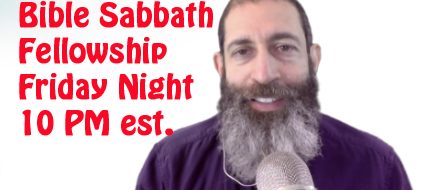
Host Paul Nison and 9 other guest fellowship and discuss Torah related topics.
If you would like to be on the panel email me at the website http://www.TorahLifeMinistries.org contact tab.
The Torah Portion for this week
Torah Portion #15 Bo (Exodus 10:1-13:16)
https://youtu.be/qpzedP5ow2w
Exodus 39
Exodus 39
Clothing for the Priests
1 The craftsmen made beautiful sacred garments of blue, purple, and scarlet cloth—clothing for Aaron to wear while ministering in the Holy Place, just as the Lord had commanded Moses.
Making the Ephod
2 Bezalel[a] made the ephod of finely woven linen and embroidered it with gold and with blue, purple, and scarlet thread. 3 He made gold thread by hammering out thin sheets of gold and cutting it into fine strands. With great skill and care, he worked it into the fine linen with the blue, purple, and scarlet thread.
4 The ephod consisted of two pieces, front and back, joined at the shoulders with two shoulder-pieces. 5 The decorative sash was made of the same materials: finely woven linen embroidered with gold and with blue, purple, and scarlet thread, just as the Lord had commanded Moses. 6 They mounted the two onyx stones in settings of gold filigree. The stones were engraved with the names of the tribes of Israel, just as a seal is engraved. 7 He fastened these stones on the shoulder-pieces of the ephod as a reminder that the priest represents the people of Israel. All this was done just as the Lord had commanded Moses.
Making the Chestpiece
8 Bezalel made the chestpiece with great skill and care. He made it to match the ephod, using finely woven linen embroidered with gold and with blue, purple, and scarlet thread. 9 He made the chestpiece of a single piece of cloth folded to form a pouch nine inches[b] square.10 They mounted four rows of gemstones[c] on it. The first row contained a red carnelian, a pale-green peridot, and an emerald. 11 The second row contained a turquoise, a blue lapis lazuli, and a white moonstone. 12 The third row contained an orange jacinth, an agate, and a purple amethyst. 13 The fourth row contained a blue-green beryl, an onyx, and a green jasper. All these stones were set in gold filigree. 14 Each stone represented one of the twelve sons of Israel, and the name of that tribe was engraved on it like a seal.
15 To attach the chestpiece to the ephod, they made braided cords of pure gold thread.16 They also made two settings of gold filigree and two gold rings and attached them to the top corners of the chestpiece. 17 They tied the two gold cords to the rings on the chestpiece.18 They tied the other ends of the cords to the gold settings on the shoulder-pieces of the ephod. 19 Then they made two more gold rings and attached them to the inside edges of the chestpiece next to the ephod. 20 Then they made two more gold rings and attached them to the front of the ephod, below the shoulder-pieces, just above the knot where the decorative sash was fastened to the ephod. 21 They attached the bottom rings of the chestpiece to the rings on the ephod with blue cords. In this way, the chestpiece was held securely to the ephod above the decorative sash. All this was done just as the Lord had commanded Moses.
Additional Clothing for the Priests
22 Bezalel made the robe that is worn with the ephod from a single piece of blue woven cloth,23 with an opening for Aaron’s head in the middle of it. The opening was reinforced with a woven collar[d] so it would not tear. 24 They made pomegranates of blue, purple, and scarlet yarn, and attached them to the hem of the robe. 25 They also made bells of pure gold and placed them between the pomegranates along the hem of the robe, 26 with bells and pomegranates alternating all around the hem. This robe was to be worn whenever the priest ministered before the Lord, just as the Lord had commanded Moses.
27 They made tunics for Aaron and his sons from fine linen cloth. 28 The turban and the special head coverings were made of fine linen, and the undergarments were also made of finely woven linen. 29 The sashes were made of finely woven linen and embroidered with blue, purple, and scarlet thread, just as the Lord had commanded Moses.
30 Finally, they made the sacred medallion—the badge of holiness—of pure gold. They engraved it like a seal with these words: Holy to the lord. 31 They attached the medallion with a blue cord to Aaron’s turban, just as the Lord had commanded Moses.
Moses Inspects the Work
32 And so at last the Tabernacle[e] was finished. The Israelites had done everything just as the Lord had commanded Moses. 33 And they brought the entire Tabernacle to Moses:
the sacred tent with all its furnishings, clasps, frames, crossbars, posts, and bases;
34 the tent coverings of tanned ram skins and fine goatskin leather;
the inner curtain to shield the Ark;
35 the Ark of the Covenant[f] and its carrying poles;
the Ark’s cover—the place of atonement;
36 the table and all its utensils;
the Bread of the Presence;
37 the pure gold lampstand with its symmetrical lamp cups, all its accessories, and the olive oil for lighting;
38 the gold altar;
the anointing oil and fragrant incense;
the curtain for the entrance of the sacred tent;
39 the bronze altar;
the bronze grating and its carrying poles and utensils;
the washbasin with its stand;
40 the curtains for the walls of the courtyard;
the posts and their bases;
the curtain for the entrance to the courtyard;
the ropes and tent pegs;
all the furnishings to be used in worship at the Tabernacle;
41 the beautifully stitched garments for the priests to wear while ministering in the Holy Place—the sacred garments for Aaron the priest, and the garments for his sons to wear as they minister as priests.
42 So the people of Israel followed all of the Lord’s instructions to Moses. 43 Then Moses inspected all their work. When he found it had been done just as the Lord had commanded him, he blessed them.
Exodus 36
Exodus 36
1 “The Lord has gifted Bezalel, Oholiab, and the other skilled craftsmen with wisdom and ability to perform any task involved in building the sanctuary. Let them construct and furnish the Tabernacle, just as the Lord has commanded.”
2 So Moses summoned Bezalel and Oholiab and all the others who were specially gifted by the Lord and were eager to get to work. 3 Moses gave them the materials donated by the people of Israel as sacred offerings for the completion of the sanctuary. But the people continued to bring additional gifts each morning. 4 Finally the craftsmen who were working on the sanctuary left their work. 5 They went to Moses and reported, “The people have given more than enough materials to complete the job the Lord has commanded us to do!”
6 So Moses gave the command, and this message was sent throughout the camp: “Men and women, don’t prepare any more gifts for the sanctuary. We have enough!” So the people stopped bringing their sacred offerings. 7 Their contributions were more than enough to complete the whole project.
Building the Tabernacle
8 The skilled craftsmen made ten curtains of finely woven linen for the Tabernacle. Then Bezalel[a] decorated the curtains with blue, purple, and scarlet thread and with skillfully embroidered cherubim. 9 All ten curtains were exactly the same size—42 feet long and 6 feet wide.[b] 10 Five of these curtains were joined together to make one long curtain, and the other five were joined to make a second long curtain. 11 He made fifty loops of blue yarn and put them along the edge of the last curtain in each set. 12 The fifty loops along the edge of one curtain matched the fifty loops along the edge of the other curtain. 13 Then he made fifty gold clasps and fastened the long curtains together with the clasps. In this way, the Tabernacle was made of one continuous piece.
14 He made eleven curtains of goat-hair cloth to serve as a tent covering for the Tabernacle.15 These eleven curtains were all exactly the same size—45 feet long and 6 feet wide.[c]16 Bezalel joined five of these curtains together to make one long curtain, and the other six were joined to make a second long curtain. 17 He made fifty loops for the edge of each large curtain. 18 He also made fifty bronze clasps to fasten the long curtains together. In this way, the tent covering was made of one continuous piece. 19 He completed the tent covering with a layer of tanned ram skins and a layer of fine goatskin leather.
20 For the framework of the Tabernacle, Bezalel constructed frames of acacia wood. 21 Each frame was 15 feet high and 27 inches wide,[d] 22 with two pegs under each frame. All the frames were identical. 23 He made twenty of these frames to support the curtains on the south side of the Tabernacle. 24 He also made forty silver bases—two bases under each frame, with the pegs fitting securely into the bases. 25 For the north side of the Tabernacle, he made another twenty frames, 26 with their forty silver bases, two bases under each frame.27 He made six frames for the rear—the west side of the Tabernacle— 28 along with two additional frames to reinforce the rear corners of the Tabernacle. 29 These corner frames were matched at the bottom and firmly attached at the top with a single ring, forming a single corner unit. Both of these corner units were made the same way. 30 So there were eight frames at the rear of the Tabernacle, set in sixteen silver bases—two bases under each frame.
31 Then he made crossbars of acacia wood to link the frames, five crossbars for the north side of the Tabernacle 32 and five for the south side. He also made five crossbars for the rear of the Tabernacle, which faced west. 33 He made the middle crossbar to attach halfway up the frames; it ran all the way from one end of the Tabernacle to the other. 34 He overlaid the frames with gold and made gold rings to hold the crossbars. Then he overlaid the crossbars with gold as well.
35 For the inside of the Tabernacle, Bezalel made a special curtain of finely woven linen. He decorated it with blue, purple, and scarlet thread and with skillfully embroidered cherubim.36 For the curtain, he made four posts of acacia wood and four gold hooks. He overlaid the posts with gold and set them in four silver bases.
37 Then he made another curtain for the entrance to the sacred tent. He made it of finely woven linen and embroidered it with exquisite designs using blue, purple, and scarlet thread.38 This curtain was hung on gold hooks attached to five posts. The posts with their decorated tops and hooks were overlaid with gold, and the five bases were cast from bronze.
Exodus 34
Exodus 34
A New Copy of the Covenant
1 Then the Lord told Moses, “Chisel out two stone tablets like the first ones. I will write on them the same words that were on the tablets you smashed. 2 Be ready in the morning to climb up Mount Sinai and present yourself to me on the top of the mountain. 3 No one else may come with you. In fact, no one is to appear anywhere on the mountain. Do not even let the flocks or herds graze near the mountain.”
4 So Moses chiseled out two tablets of stone like the first ones. Early in the morning he climbed Mount Sinai as the Lord had commanded him, and he carried the two stone tablets in his hands.
5 Then the Lord came down in a cloud and stood there with him; and he called out his own name, Yahweh.[a] 6 The Lord passed in front of Moses, calling out,
“Yahweh![b] The Lord!
The God of compassion and mercy!
I am slow to anger
and filled with unfailing love and faithfulness.
7 I lavish unfailing love to a thousand generations.[c]
I forgive iniquity, rebellion, and sin.
But I do not excuse the guilty.
I lay the sins of the parents upon their children and grandchildren;
the entire family is affected—
even children in the third and fourth generations.”
8 Moses immediately threw himself to the ground and worshiped. 9 And he said, “O Lord, if it is true that I have found favor with you, then please travel with us. Yes, this is a stubborn and rebellious people, but please forgive our iniquity and our sins. Claim us as your own special possession.”
10 The Lord replied, “Listen, I am making a covenant with you in the presence of all your people. I will perform miracles that have never been performed anywhere in all the earth or in any nation. And all the people around you will see the power of the Lord—the awesome power I will display for you. 11 But listen carefully to everything I command you today. Then I will go ahead of you and drive out the Amorites, Canaanites, Hittites, Perizzites, Hivites, and Jebusites.
12 “Be very careful never to make a treaty with the people who live in the land where you are going. If you do, you will follow their evil ways and be trapped. 13 Instead, you must break down their pagan altars, smash their sacred pillars, and cut down their Asherah poles. 14 You must worship no other gods, for the Lord, whose very name is Jealous, is a God who is jealous about his relationship with you.
15 “You must not make a treaty of any kind with the people living in the land. They lust after their gods, offering sacrifices to them. They will invite you to join them in their sacrificial meals, and you will go with them. 16 Then you will accept their daughters, who sacrifice to other gods, as wives for your sons. And they will seduce your sons to commit adultery against me by worshiping other gods. 17 You must not make any gods of molten metal for yourselves.
18 “You must celebrate the Festival of Unleavened Bread. For seven days the bread you eat must be made without yeast, just as I commanded you. Celebrate this festival annually at the appointed time in early spring, in the month of Abib,[d] for that is the anniversary of your departure from Egypt.
19 “The firstborn of every animal belongs to me, including the firstborn males[e] from your herds of cattle and your flocks of sheep and goats. 20 A firstborn donkey may be bought back from the Lord by presenting a lamb or young goat in its place. But if you do not buy it back, you must break its neck. However, you must buy back every firstborn son.
“No one may appear before me without an offering.
21 “You have six days each week for your ordinary work, but on the seventh day you must stop working, even during the seasons of plowing and harvest.
22 “You must celebrate the Festival of Harvest[f] with the first crop of the wheat harvest, and celebrate the Festival of the Final Harvest[g] at the end of the harvest season. 23 Three times each year every man in Israel must appear before the Sovereign, the Lord, the God of Israel.24 I will drive out the other nations ahead of you and expand your territory, so no one will covet and conquer your land while you appear before the Lord your God three times each year.
25 “You must not offer the blood of my sacrificial offerings together with any baked goods containing yeast. And none of the meat of the Passover sacrifice may be kept over until the next morning.
26 “As you harvest your crops, bring the very best of the first harvest to the house of the Lordyour God.
“You must not cook a young goat in its mother’s milk.”
27 Then the Lord said to Moses, “Write down all these instructions, for they represent the terms of the covenant I am making with you and with Israel.”
28 Moses remained there on the mountain with the Lord forty days and forty nights. In all that time he ate no bread and drank no water. And the Lord[h] wrote the terms of the covenant—the Ten Commandments[i]—on the stone tablets.
29 When Moses came down Mount Sinai carrying the two stone tablets inscribed with the terms of the covenant,[j] he wasn’t aware that his face had become radiant because he had spoken to the Lord. 30 So when Aaron and the people of Israel saw the radiance of Moses’ face, they were afraid to come near him.
31 But Moses called out to them and asked Aaron and all the leaders of the community to come over, and he talked with them. 32 Then all the people of Israel approached him, and Moses gave them all the instructions the Lord had given him on Mount Sinai. 33 When Moses finished speaking with them, he covered his face with a veil. 34 But whenever he went into the Tent of Meeting to speak with the Lord, he would remove the veil until he came out again. Then he would give the people whatever instructions the Lord had given him, 35 and the people of Israel would see the radiant glow of his face. So he would put the veil over his face until he returned to speak with the Lord.
Footnotes:
- 34:5 Yahweh is a transliteration of the proper name YHWH that is sometimes rendered “Jehovah”; in this translation it is usually rendered “the Lord” (note the use of small capitals).
- 34:6 See note on 34:5.
- 34:7 Hebrew for thousands.
- 34:18 Hebrew appointed time in the month of Abib. This first month of the ancient Hebrew lunar calendar usually occurs within the months of March and April.
- 34:19 As in Greek version; the meaning of the Hebrew word is uncertain.
- 34:22a Hebrew Festival of Weeks; compare 23:16. This was later called the Festival of Pentecost. It is celebrated today as Shavuot (or Shabuoth).
- 34:22b Or Festival of Ingathering. This was later called the Festival of Shelters or Festival of Tabernacles (see Lev 23:33-36). It is celebrated today as Sukkot (or Succoth).
- 34:28a Hebrew he.
- 34:28b Hebrew the ten words.
- 34:29 Hebrew the two tablets of the Testimony; see note on 25:16.